
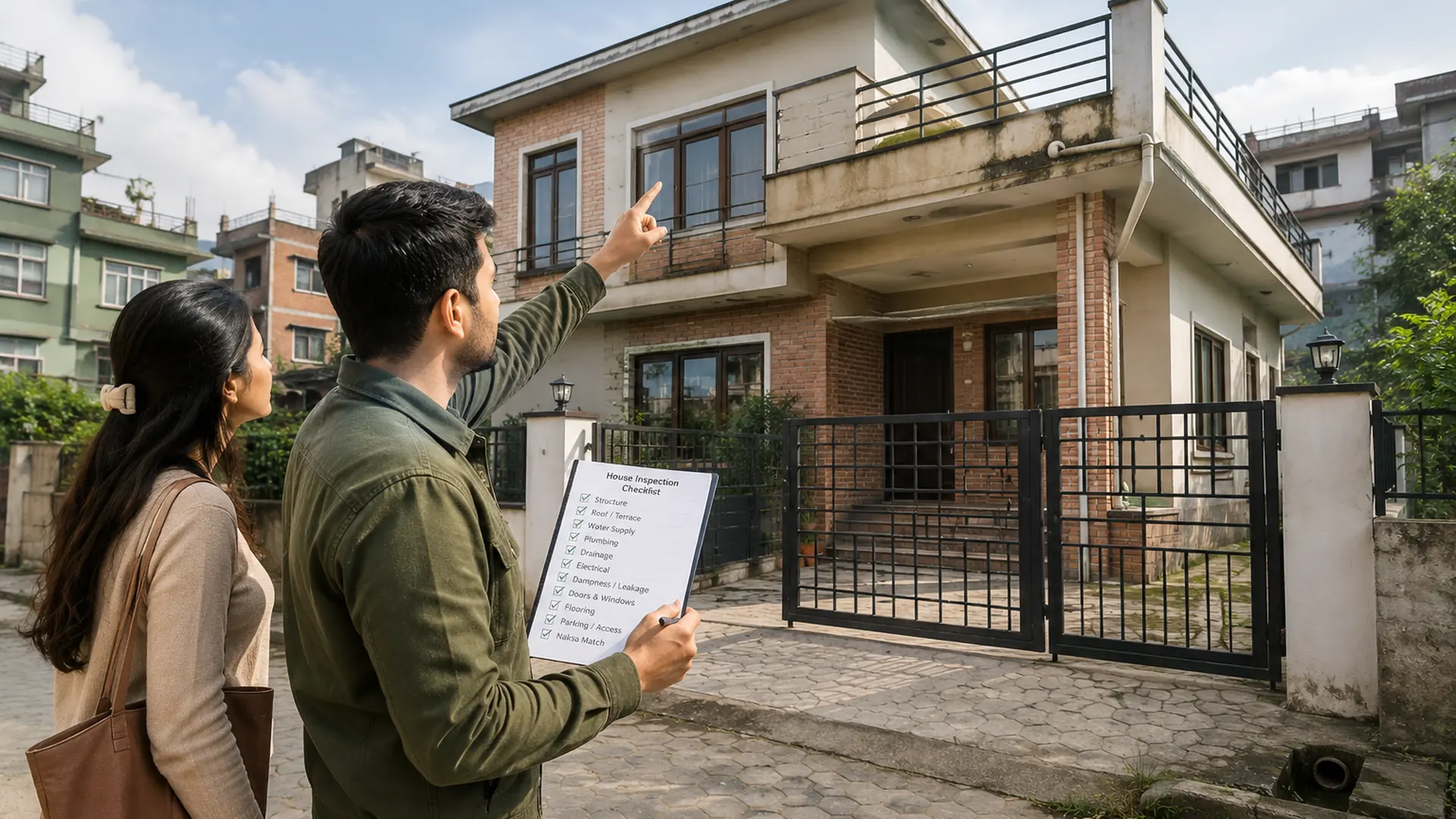
Before you pay an advance on a house in Nepal, walk through the visible structure, roof, terrace, water supply, plumbing, drainage, electrical system, dampness, road access, and parking. Compare the building against its approved Naksa, and ask the seller directly about its construction age, past repairs, and any alterations. If you notice major cracks, structural changes, or documents that do not match what you see, get a qualified engineer to assess it before you go any further. Punarvaasu Nepal can help with listings, property information, and coordinating your site visit — structural and electrical assessment is a job for a qualified house inspection professional.
This is a different job from our guide on the complete process of buying a house in Nepal — that one walks you through the legal and financial journey end to end. This one is narrower: it’s what to actually look at, in person, once you’ve shortlisted a house and are standing in front of it.
Why This Matters Before You Pay Anything
Recovering an advance can be difficult if the agreement does not clearly state refund and cancellation conditions, and once it changes hands, your negotiating position on any defects you find afterward gets weaker fast. Buyers should not assume every defect will appear in the listing or be mentioned during a quick visit, and a coat of fresh paint hides more than it reveals. A short, structured inspection before the advance is one of the simplest ways to reduce avoidable risk in the entire transaction.
Before You Even Visit
A few questions asked ahead of time save you a wasted trip. Ask the seller directly for the construction year, whether any floors or rooms were added after the original build, whether there’s a repair history worth knowing about, and how water and drainage are arranged on the property. Bring a phone for photos, a flashlight for dark corners, a measuring tape, and something to take notes on — you will forget half of what you saw by the time you get home.
What to Check Outside the House
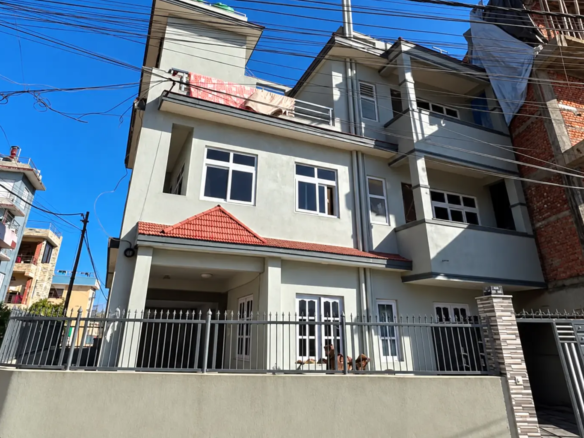
Start outside before you go in. Look at the road access and whether parking is actually usable, not just technically present. Check how the land drains — pooling water on the terrace or near the foundation after rain is worth noting even if the house looks dry on a clear day. On sloped plots, look closely for any movement in retaining walls. Walk the perimeter for exterior cracks, and pay particular attention to cracks running through or near columns, beams, and the corners of doors and windows — these matter more than surface cracks in plain plaster.
Check the roof edge and terrace for how rainwater is channelled off, and look for a rooftop room or extra floor that looks newer than the rest of the structure, which can be a sign of an addition made after the original approval. Where you can, compare the footprint of the building against what the property documents describe.
What to Check Inside the House
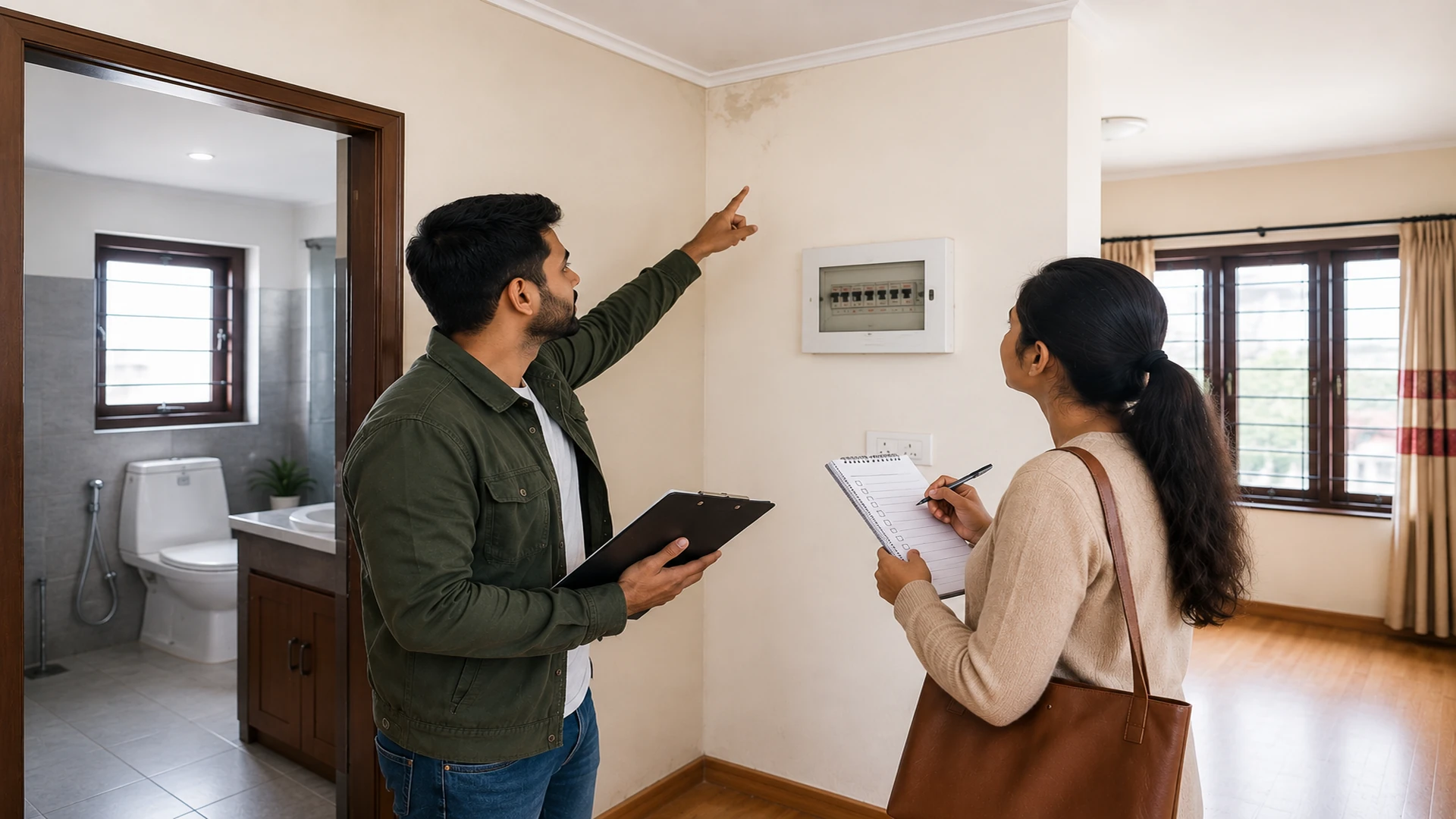
Inside, look up at ceilings and into corners for water stains or a patch of paint that looks newer than the wall around it — a common way sellers cover recent monsoon leakage or dampness. Ask about rooftop and underground water tanks: how old they are, how often they’re cleaned, and whether the water pressure you’re feeling at the tap is normal or was topped up shortly before your visit. If the property uses a septic tank, a lingering drainage smell near a bathroom or kitchen is worth asking about directly rather than assuming it’s incidental. Run the taps and flush the toilets to get a feel for real water pressure and drainage speed, not just whether the fixtures exist.
Visually inspect the distribution board without touching any exposed components, and plan on hiring an electrician if the wiring looks old, exposed, or unsafe. Open doors and windows to check they sit properly in their frames, walk the floors for anything uneven, and check the staircase for stability. Natural light and ventilation are also worth paying attention to room by room — a house that looks fine in photos can still have rooms that stay dark or stuffy year-round. If you also want to weigh the layout against traditional Vastu principles, our Vastu guide covers that separately.
Comparing the House Against Its Approved Naksa
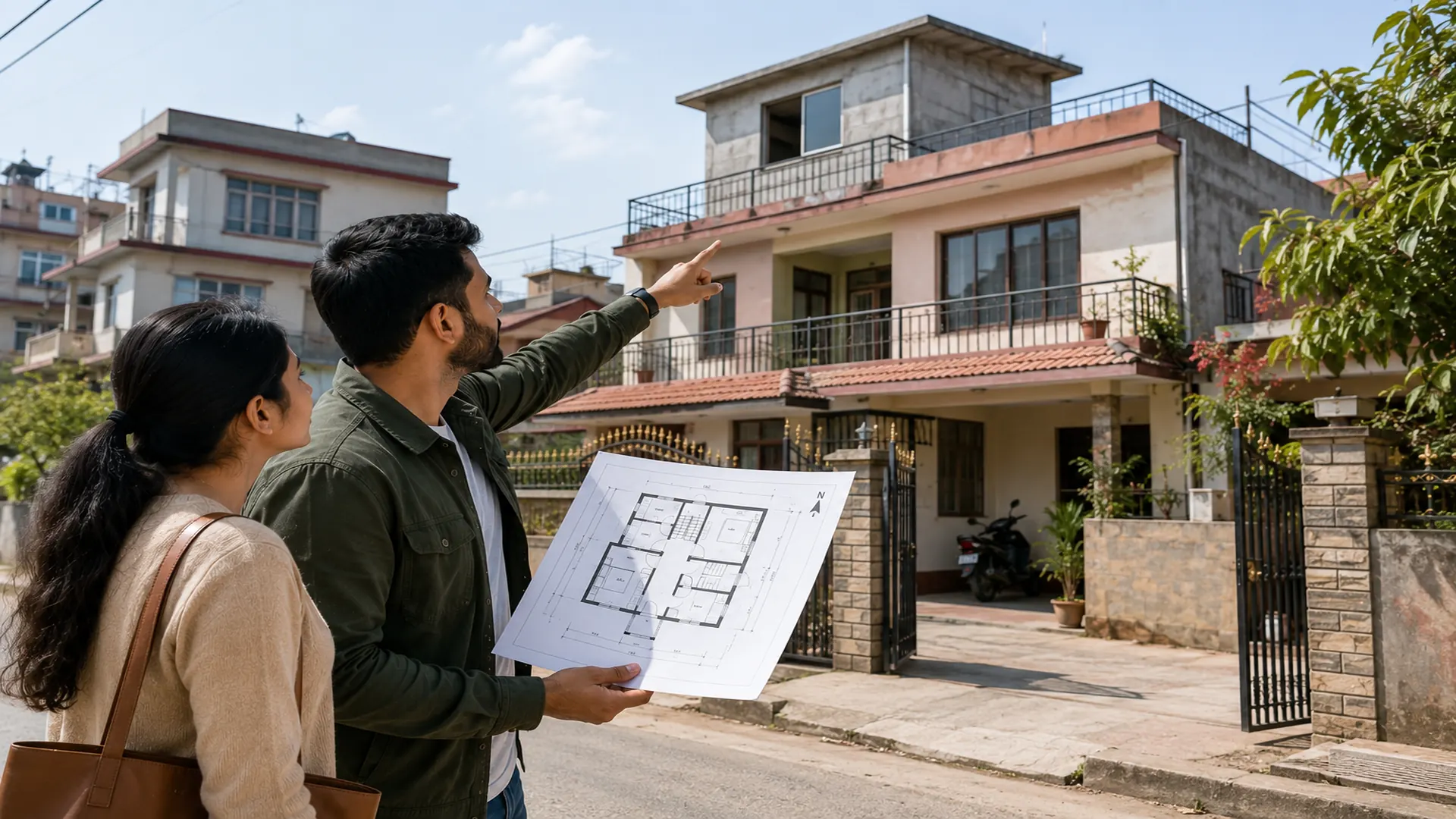
One of the most overlooked checks is holding the physical house up against its approved building plan — how many floors were actually approved, whether the footprint matches, where the parking and staircase were supposed to be, and whether a rooftop room or extra floor exists that isn’t reflected in the paperwork. This is not the place to relearn the entire Naksa Pass process — our Naksa Pass guide covers that in full — but it is the place to actually check the plan against the building in front of you before you commit to it.
Sorting What You Find Into Three Levels
Not everything you notice deserves the same reaction. It helps to sort findings into three rough categories.
Minor and worth noting, not worrying about — faded paint, a loose door handle, small plaster cracks, a chipped tile. Note these down for your maintenance budget and move on.
Worth asking more about — repeated leakage, weak water pressure, doors that stick, uneven flooring, old or exposed wiring, or one patch of a wall that’s been painted more recently than the rest. Ask the seller for repair history on these, and bring in a specialist if the answer doesn’t sit right.
Some findings shouldn’t just go on your notes list — they should stop the process entirely until they’re explained. A diagonal crack running through a column or beam is a structural question, not a cosmetic one. So is a floor that exists on the roof but not on paper, or a retaining wall that looks like it’s shifted. Unclear boundaries belong in this category too — that’s not something a repaint or a good explanation fixes. And if a seller resists letting you inspect properly, or can’t produce documents when asked, treat that reluctance itself as the red flag, regardless of how the house looks. None of these are advance-worthy until someone qualified has signed off.
When to Bring in a Professional
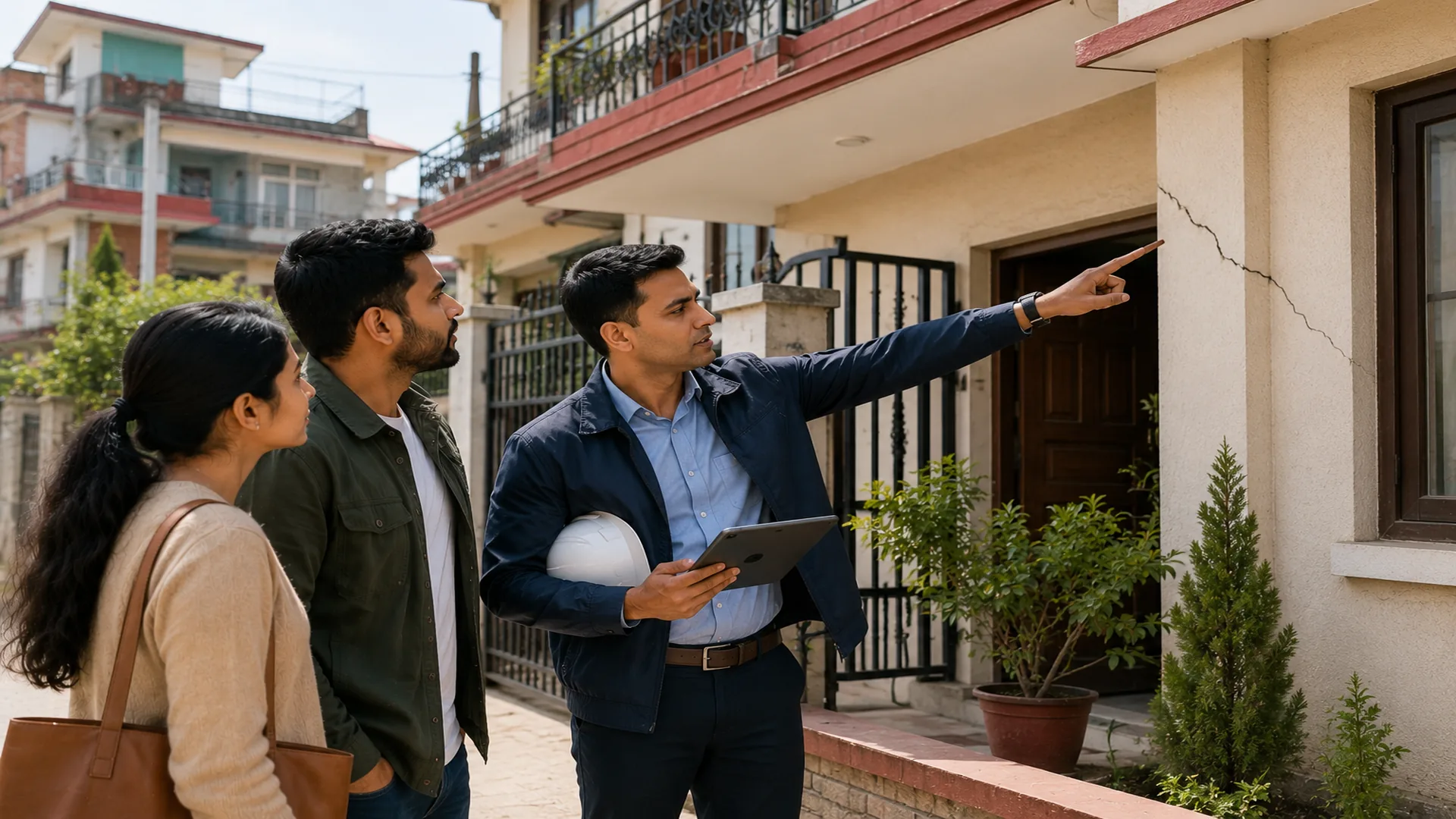
There’s a real difference between what you can reasonably judge yourself and what needs an engineer. You can observe visible cracks, leakage, dampness, water pressure, drainage, exposed wiring, door alignment, and obvious modifications. Foundation movement, structural cracks, column or beam damage, retaining wall stability, and how well an added floor is actually supported are judgment calls for a qualified professional, not a buyer walking through with a flashlight. If your visit turns up anything from the “pause” list above, treat a professional assessment as a normal part of the process rather than an extra expense you’re trying to avoid.
What to Confirm Before You Pay the Advance
Before money changes hands, you should be able to answer a few things without hesitation: does the physical house match its approved Naksa, are you satisfied with the answers you got on repair history and alterations, have you had anything from the “pause” list properly checked, and does the price still make sense given what you found. If any of these feels unresolved, it’s worth waiting rather than paying to hold your place in the queue.
A Printable Site-Visit Checklist
| Inspection Area | What to Check |
| Road & parking | Access width, usability |
| Exterior & structure | Cracks near columns, beams, doors, windows |
| Retaining walls & land | Movement, sloped-plot stability |
| Roof & terrace | Drainage, water ponding |
| Water tanks | Rooftop/underground tank age & condition |
| Septic & drainage | Odour, drainage speed |
| Interior walls & ceilings | Damp patches, recent repainting |
| Electrical | Distribution board (visual only) |
| Doors, windows, floors, staircase | Alignment, evenness, stability |
| Naksa comparison | Floors, footprint, additions vs. approved plan |
| Repair & alteration history | Seller’s answers on age and changes |
Frequently Asked Questions
Can I do this inspection myself, or do I need to hire someone?
You can and should do the visual walkthrough yourself — most of what’s covered above doesn’t require special training. Bring in a qualified professional when you notice structural, electrical, plumbing, drainage, or document-related concerns that require expert assessment.
How long should a house inspection like this actually take?
Allow around 45–60 minutes for your own walkthrough if you’re checking things properly rather than rushing through. A professional inspection, if you bring one in, may take several hours since it involves a closer structural and technical assessment.
What if the seller won’t let me inspect the house properly?
Treat that as information in itself. A seller who’s reluctant to let you check water pressure, view the distribution board, or compare the house to its Naksa is worth being cautious about, regardless of how good the listing photos looked.
Does this replace the document and legal checks I still need to do?
No — this is specifically about the physical condition of the house. You’ll still need to go through the complete process of buying a house in Nepal, which covers land ownership verification and registration as a separate part of the process.
Is an old house automatically riskier than a newer one?
Not automatically, but older houses are more likely to have accumulated repairs, alterations, or wear that’s worth a closer look — particularly around plumbing, wiring, and any additions made after the original construction.
This checklist supports an initial visual review and does not replace structural, electrical, or legal assessment by qualified professionals.
Looking at a specific house? Punarvaasu Nepal can help with listings, property information, and coordinating your site visit — bring in a qualified engineer for anything structural that this checklist flags.



Join The Discussion