
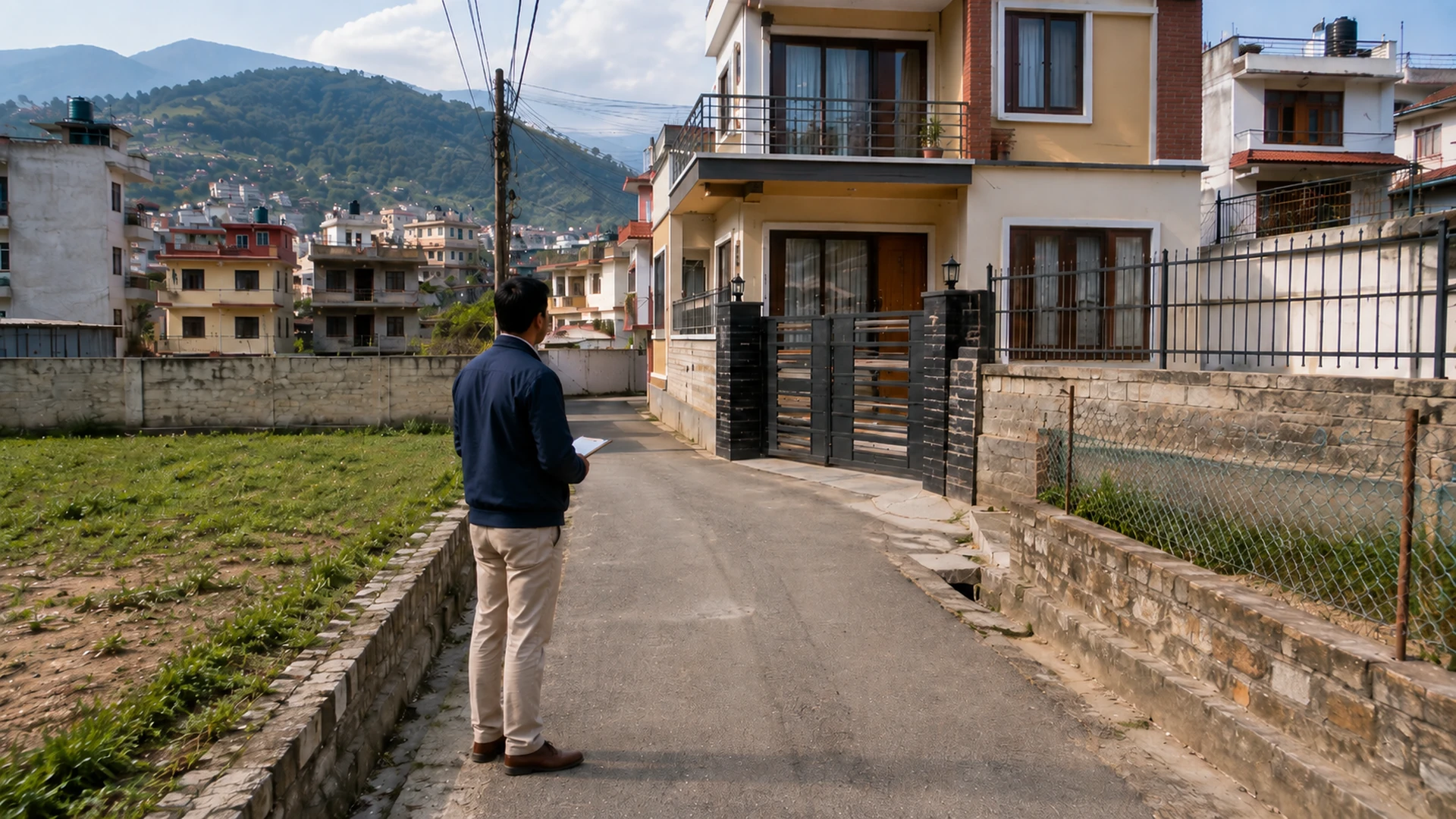
Ghar Bato Sifaris is a recommendation issued by the concerned ward office that provides official information about a property’s road access — its type, width, and how it connects according to local records. If you’re buying, selling, or registering land in Nepal, you’ll likely encounter this document, and confusing it with the paperwork you already know — Lalpurja, the trace map, a right-of-way check — is one of the easier mistakes to make during a transaction. At Punarvaasu Nepal, road-access questions come up constantly during property deals, so here’s a clear breakdown of what this document is, why it matters, and how to get one.
What Does Ghar Bato Sifaris Mean?
The term breaks down straightforwardly in Nepali: Ghar means house or property, Bato means road, and Sifaris means recommendation. Put together, it’s the road-access recommendation a ward office issues for a specific property — not a certificate of ownership, and not a construction permit, just an official record of the property’s road situation.
Why Ghar Bato Sifaris Matters When Buying Property
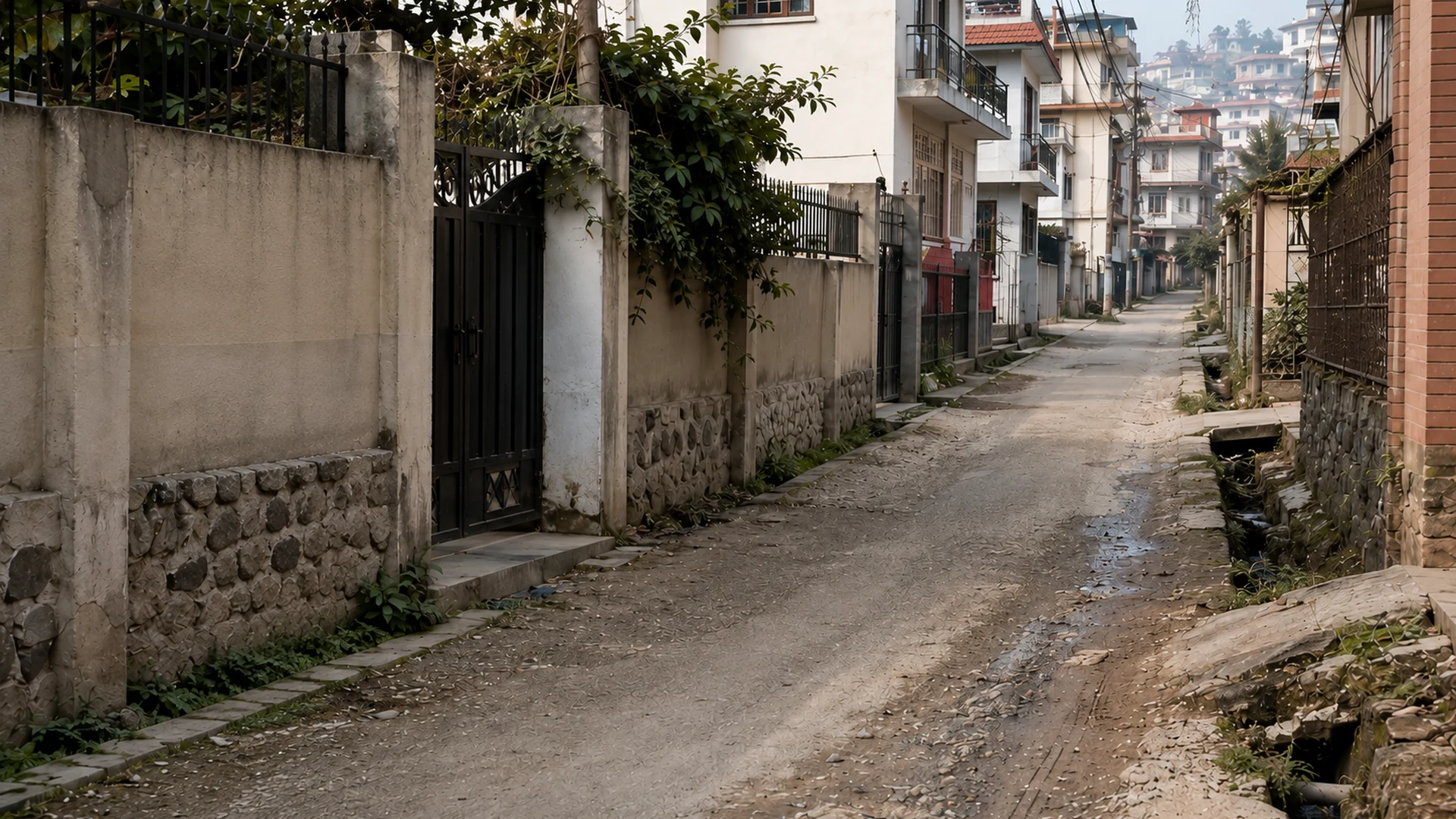
On paper, this looks like a small administrative step. In practice, it’s one of the few documents that directly confirms whether a property’s road access matches what a seller or listing claims. A plot can look perfectly accessible from the street and still run into disputes later if the road’s legal status, width, or classification isn’t formally recorded. Lenders and land registration offices often require this recommendation precisely because it closes that gap — it’s evidence, not just an assumption, that the access is what it appears to be.
For a buyer, that makes it directly relevant to due diligence, not just paperwork. Before paying an advance, you want to know that what you’re told about a property’s road access can actually be verified through this document, rather than taken on the seller’s word — and since road access feeds directly into what a plot is worth, it’s a factor worth weighing alongside our guide on understanding property valuation in Nepal.
When Do You Need Ghar Bato Sifaris?
Property sale and purchase is the context this comes up in most consistently — it’s the default case, and the one the rest of this guide assumes. Beyond that, it can also surface when preparing documentation for a bank loan or applying for construction-related approvals, but those two are more situational: whether it’s required depends on the municipality, the ward’s specific requirements, and the lender or office you’re dealing with. Rather than assuming it applies universally outside a straightforward sale, it’s worth confirming directly with your ward office or the party handling your paperwork if you’re in one of those less certain cases.
Documents Typically Required for Ghar Bato Sifaris
Requirements are set at the ward level, so they vary somewhat by municipality — but most ward offices ask for a similar core set:
| Document | Purpose |
|---|---|
| Written application | States the property’s location and road details |
| Citizenship certificate copy | Identifies the applicant |
| Lalpurja copy | Confirms current land ownership |
| Survey or blueprint map | Shows the property’s location and layout |
| Tax clearance documents | Confirms land tax standing, where applicable |
| Other ward-specific documents | Varies by local authority |
Some wards also carry out a field inspection before issuing the recommendation, confirming the road situation matches what’s been submitted on paper. Because the exact list and process differ from one ward to another, it’s worth confirming directly with the relevant ward office rather than assuming one municipality’s requirements apply everywhere.
How to Apply for Ghar Bato Sifaris
The general process follows a similar shape across most wards: submit your application and supporting documents to the ward office that has jurisdiction over the property in question — not a district or municipal office more broadly — pay the applicable service fee (this is typically a modest, fixed charge, though the amount is set locally), and wait for the office to review — and in some cases physically inspect — the property’s road access before issuing the recommendation. If you’re unsure which ward covers your property, the municipality’s citizen-service desk can usually point you in the right direction. Processing time varies by ward and by how busy the office is, so it’s sensible to build in some buffer if this document is needed for a time-sensitive transaction.
What Information Does Ghar Bato Sifaris Usually Include?
The exact format varies by ward, but the recommendation typically records the property owner’s details, the property’s location, the type and category of the connecting road, the road’s width, and how the property connects to it — along with a note confirming the ward has verified these details. It’s a short, factual document rather than a lengthy certificate, which is part of why it’s easy to underestimate until you actually need to produce one.
Ghar Bato Sifaris vs. Lalpurja: What’s the Difference?
These two get confused often, but they answer different questions. Lalpurja is your proof of ownership — it establishes who legally owns the land. Ghar Bato Sifaris says nothing about ownership; it’s a statement about the property’s road access and, in some cases, whether a house has been built on it. You need both during many property transactions, but they’re not interchangeable, and one doesn’t substitute for the other. If you’re still working through the ownership side of things, our guide on how to buy land in Nepal covers the full sequence this fits into.
Ghar Bato Sifaris vs. Trace Map vs. Right of Way vs. Char Killa
A few related documents and concepts tend to blur together for buyers new to the process:
- Trace map (napi naksha) shows the land’s cadastral boundaries and survey data — where the plot sits and how it’s shaped, not how it’s accessed.
- Right of way is the broader legal question of whether a property has valid, usable access to a public road at all. Our guide on checking right of way before buying land covers this in more depth.
- Char Killa refers to the property’s four boundary markers or boundary certification — confirming what’s adjacent to the land on each side, not its road access.
- Ghar Bato Sifaris, by contrast, is the specific ward-issued recommendation that provides official information about the property’s road access details.
Each one answers a different question. A property can have a clean trace map and confirmed boundaries but still run into road-access complications — which is exactly why these documents exist separately rather than as one combined check.
What Buyers Should Check Before Paying an Advance
Road access is easy to underestimate until it affects what you can actually do with a property. Before committing to a purchase, it’s worth confirming the road’s legal status and width — not just its physical appearance — since informal or narrow access can limit construction permissions later. It’s also worth checking whether the seller has already obtained the Ghar Bato Sifaris or whether that step still needs to happen, since delays here can hold up registration. And it’s worth asking directly whether there’s any history of access disputes involving the property, since road disagreements between neighbours are common enough in dense parts of the Kathmandu Valley to be worth ruling out early rather than discovering later.
Most of the trouble that comes up isn’t dramatic — it’s small mismatches that cause delays. A road listed as one width on paper turning out to be narrower in practice. A property that appears to front a public road but is technically accessed through a shared or private lane. A neighbour disputing the boundary a road easement runs along. None of these are unusual, but each one can stall a transaction if it surfaces after an advance has already been paid rather than before — which is exactly what checking the Ghar Bato Sifaris upfront helps you avoid. It’s worth pairing that document check with a physical house inspection too, so the recorded details and the site itself get confirmed together rather than taken on trust separately.
For example: suppose you’re looking at a 4-aana plot in Lalitpur, and the seller mentions the property has access through a 13-foot road. Before paying an advance, checking the Ghar Bato Sifaris lets you verify the officially recorded road details against what you’re being told — rather than relying only on what the road looks like during a site visit. Road width in particular affects what you can eventually build, so a gap between the claimed and recorded width is worth catching before money changes hands, not after.
Our guide on how to verify land in Nepal walks through the broader verification process this fits into, and the legal process for buying land in Nepal covers where this step sits relative to registration.
Frequently Asked Questions
What is Ghar Bato Sifaris?
A recommendation issued by the concerned ward office providing official information about a property’s road access — its type, width, and how it connects, according to local records.
Who issues Ghar Bato Sifaris?
Whichever ward office covers the property in question is responsible for issuing the Ghar Bato Sifaris.
What documents are required for Ghar Bato Sifaris?
Typically a written application, citizenship copy, Lalpurja copy, survey or blueprint map, and tax clearance documents where applicable — though the exact list varies by ward.
Is Ghar Bato Sifaris mandatory when buying land?
It depends on the municipality, the ward’s requirements, and the nature of the transaction — it isn’t a uniform requirement everywhere, so it’s worth checking whether it applies to your specific purchase rather than assuming either way.
How much does Ghar Bato Sifaris cost?
The fee varies by municipality and ward office, so it’s worth confirming the current service charge with the concerned ward rather than assuming a fixed nationwide amount.
How long does Ghar Bato Sifaris take to obtain?
Processing time depends on the ward office and whether a field inspection is required, so timelines aren’t consistent nationwide. If this document is needed for a time-sensitive transaction, it’s worth asking the ward office directly for a realistic estimate rather than relying on a general figure.
Is Ghar Bato Sifaris the same as Lalpurja or right of way?
No to both. Lalpurja proves ownership; right of way is the broader legal question of valid access; Ghar Bato Sifaris is the specific ward recommendation documenting the road’s details.
Do requirements differ by municipality?
Yes. Document lists, fees, and processing steps are set at the ward level, so it’s worth confirming locally rather than assuming a fixed national process.
Before investing in land or a house, verifying documents, access roads, and property details can prevent costly mistakes. Punarvaasu Nepal helps buyers evaluate property opportunities across the Kathmandu Valley with proper due diligence and location insight.


Join The Discussion