
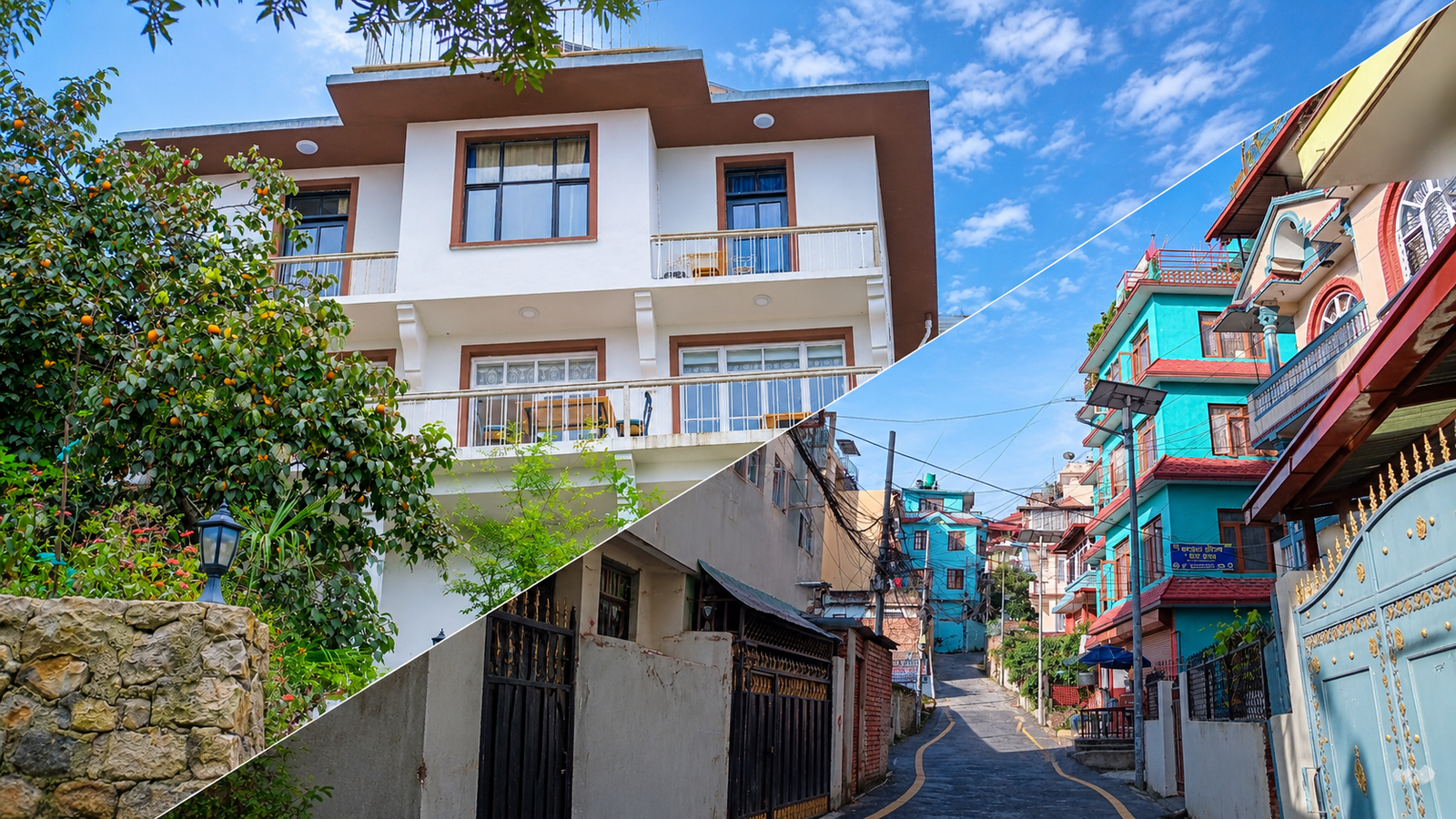
Neither is automatically better, and the year a house was built tells you less than you might expect. What counts is the condition, construction history, location and paperwork of the specific house, whether it is new or old. This guide from Punarvaasu Nepal shows how to weigh a house in Kathmandu on that evidence.
Along the way, it covers how building age relates to earthquake safety and which documents matter most when the house is older.
What Is the Difference Between a New and an Old House in Kathmandu?
Before comparing the two, it helps to be clear about the terms. In this guide, a new house in Kathmandu is one that has recently been built and has not been lived in. An old house in Kathmandu is one that has been occupied before, so it comes with a history of use, repairs and sometimes changes to the original structure.
This guide does not use a fixed number of years to separate the two, because age on its own says little. It treats age, occupancy and condition as three separate things. A house lived in for only a few years can be in excellent shape. A recently finished house can still have poor workmanship or differ from its approved plans.
That is why age works best as a starting point for questions, not as a verdict. The sections below look at what each type usually offers and what each asks of the buyer.
What Are the Trade-Offs of Buying a New House?
What a new house usually offers
A newly built house is planned around current living habits, so its layout, fittings and services are often more up to date. Wiring, plumbing and finishes are new, which usually means fewer repairs in the early years.
You are also the first occupant. There are no earlier owners’ alterations to untangle, and no history of use to investigate. For many families, that clean start is the main appeal.
What to watch for
New does not automatically mean well built. Workmanship varies between builders, and a good finish can hide weak construction. Ask to see the approved building plans and check that the house matches them.
Price is another consideration. A new house can cost more than an older one nearby, though price depends heavily on land size, road access and location, not only on age. To see how those factors work, read our guide to house prices in Kathmandu.
Some new houses also stand in areas that are still developing. Look at road access, drainage and water supply as well as the house itself, because a polished interior does not fix a weak surrounding.
Finally, a new house is not automatically safer than an older one. How a building was designed and constructed matters more than its age, a point the earthquake safety section below returns to.
What Are the Trade-Offs of Buying an Old House in Kathmandu?
What an old house usually offers
Older houses often stand in established neighbourhoods, where roads, shops, schools and neighbours are already in place. For buyers who value a settled location, that can matter more than a modern finish.
An old house also lets you see how a home has actually been lived in. You can visit at different times of day, look at walls and ceilings for signs of damp, and ask neighbours about the area. A new house can only show you its plans and fresh paint.
What to watch for
Age brings maintenance. Wiring, plumbing and the roof may be due for repair or replacement, and the cost depends entirely on the house. Get a clear picture of its condition before you agree on a price, instead of assuming that a renovation is, or is not, needed.
Look for changes made after the house was built. Extra floors, moved walls and enclosed balconies can all alter a house, and they may not appear in the approved plans.
Paperwork can also be harder to trace for an older property, especially one that has passed between family members. The documents section below explains what to look for.
Buying an old house in Kathmandu is therefore less about the age on paper and more about what has happened to the building since it was built.
How Does Building Age Affect Earthquake Safety in Kathmandu?
Building age matters for earthquake safety mainly because the rules in force when a house was designed have changed over time, and so has how closely they were enforced. A date alone does not tell you whether a particular house is safe.
Nepal’s seismic design code, NBC 105, was first published in 1994, but applying it took years. According to a United Nations Centre for Regional Development handbook, Lalitpur began implementing the National Building Code in its permit process in 2002, the first municipality in Nepal to do so. Kathmandu Metropolitan City followed in 2006, the same year a government notice made the code mandatory in all municipalities and some village development committees.
The seismic standard itself has since been revised twice:
- NBC 105:1994: the first edition.
- NBC 105:2020: the first revision, following the 2015 Gorkha earthquake.
- NBC 105:2025: the second revision.
This means houses built in different places and years began under different rules and different levels of enforcement. For illustration only, a house built in Kathmandu in the early 1990s, one built in the mid-2000s and one built in 2018 started in very different circumstances. Those dates tell you which questions to ask: which rules applied, whether the plans were approved, and whether construction followed them. They do not tell you which house is safe.
The same caution applies to new houses. A recent date does not prove that a building was constructed to its approved design. The 2025 revision is a design standard, so it is not a test you can apply to an existing house by looking at when it was built.
Alterations matter too. Added floors or removed walls can change how a building behaves in an earthquake, even when the original construction was sound.
When it comes to the earthquake safety of old houses in Nepal, then, a build date is a clue, not an answer. If a house is older, has been extended, or has no traceable approved plans, a professional structural assessment before you commit is worth considering. It is the one step that no date, document or listing can replace.
What Documents Should You Check When Buying an Older House?
For an older house, paperwork answers one question: does what is standing match what was approved? Four checks cover most of it.
The approved plan and permit. Ask for the original building permit and the approved drawings, often called the Naksa. If you are researching the Naksa Pass for old houses and are unsure what the record should show, our guide to the Naksa Pass in Nepal explains the process.
Completion records. Ask whether a completion certificate was issued. Requirements and record-keeping have differed between municipalities and over the years, so ask the relevant municipal office what is on file for the property instead of assuming.
A match between paper and building. Compare the approved plan with the house itself, including the number of floors, the layout and the built-up area. A floor or major change that is missing from the plan is a question for the seller and a good reason to bring in an engineer. Our house inspection checklist covers the physical walk-through, so it is not repeated here.
Ownership. Confirm that the seller is the registered owner and that the land record is clear, using our guide on how to verify land in Nepal. If the house was inherited and is still in a relative’s name, ownership may need to be transferred before a sale. Our guide to Jagga Namsari explains that process.
A permit shows that a plan was approved. It does not show that the building was built to that plan or that it is structurally sound. For legal questions about a specific property, speak to a qualified lawyer, and for structural ones, an engineer.
So, Which Should You Buy?
The honest answer depends on what you value and how much work you are prepared to take on after the purchase.
A new house tends to suit buyers who want to move in with few repairs and prefer a modern layout. The trade-off is that you may pay more or live in an area that is still developing, and you still need to confirm that the house matches its approved plans.
An old house tends to suit buyers who put location and an established neighbourhood first, and who are willing to inspect closely and budget for upkeep. The trade-off is more homework: older paperwork, possible alterations and a greater need for an engineer’s opinion.
Two questions can settle a close call. First, how much repair and decision-making can you take on after buying? Renovation costs vary too much between houses to estimate here, so get quotes for the specific property before you commit. Second, how long do you plan to stay? If it is for many years, condition and safety matter more than style, and clear paperwork helps whichever type you choose.
Whatever you decide, judge each house on its own evidence, not its age. Check that the approved plans exist, that the building matches them, that ownership is clean, and that an engineer has looked at anything that raises doubt.
If you are still working out your budget and preferred area, start with our guide to buying a house in Kathmandu as a first-time buyer.
Looking for a house in Kathmandu?
Explore residential properties listed with Punarvaasu Nepal, or contact the team with your budget and preferred area. Whatever type of house you choose, check its documents, have its condition assessed and resolve any concerns before you pay an advance.
Frequently Asked Questions
Is an older house in Kathmandu always less safe than a new one?
No. Age alone does not decide safety. How a house was designed, built, approved and later altered matters more, and only a structural engineer can judge a particular building. A new house is not safe by default either.
Does having a Naksa Pass mean a house is earthquake-resistant?
No. An approved plan shows that a design was accepted at the time. It does not show that the house was built to that design or that it is structurally sound today, which is why the building should be compared with its plans.
Can you buy an older house if its original building plans are unavailable?
Missing plans are a warning sign, not an automatic dead end. Ask the municipal office what records exist for the property, and take advice from a lawyer on the paperwork and an engineer on the structure before you commit.
Is a new house always more expensive than an old one in Kathmandu?
Not necessarily. Price depends on land size, road access and location as much as on age, so two houses of different ages in the same area can cost similar amounts. Compare specific properties instead of assuming.


Join The Discussion