
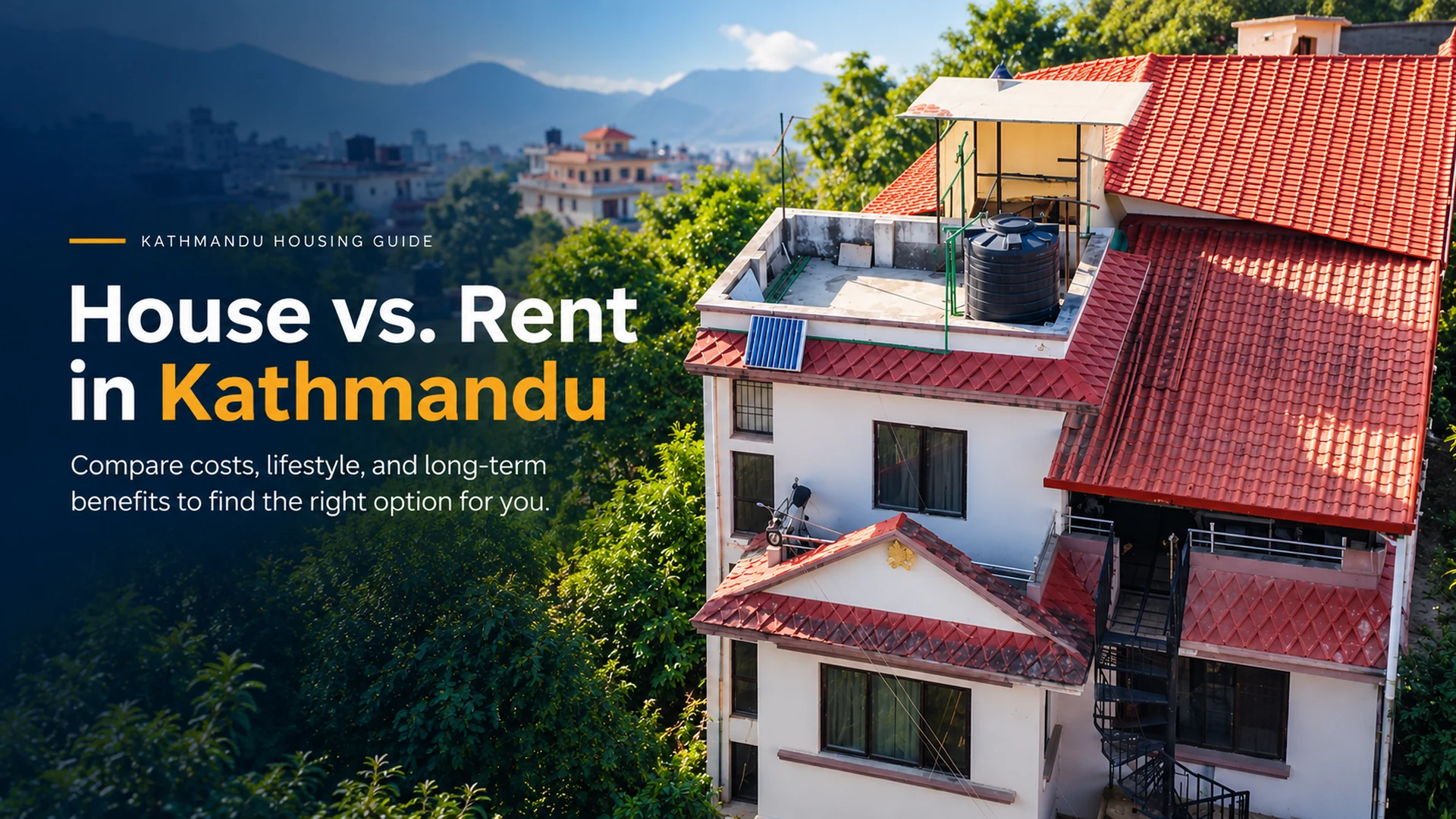
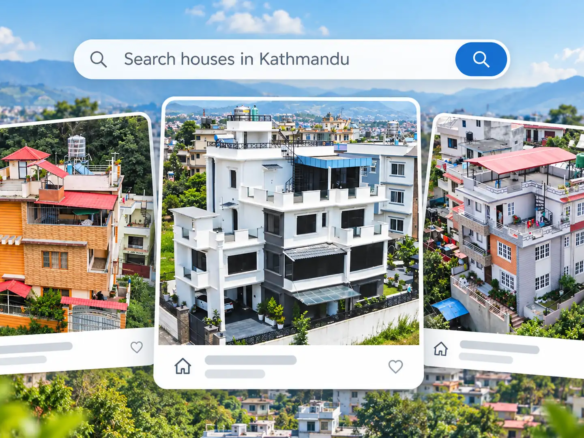
Buying makes sense in Kathmandu when you plan to stay in the city long term and can carry the costs comfortably, because ownership gives you stability, control over your home, and an asset that stays yours. That is the practical case for anyone asking why buy a house in Kathmandu instead of renting, although renting still wins for people who need flexibility or are not yet financially ready. Looking through the homes on Punarvaasu Nepal is a good way to test how ownership would fit your life before you commit.
Both options are legitimate, and the right one depends on your income, your savings, and how long you expect to stay. This guide looks at each side honestly so you can decide with clear eyes. Neither choice is a mistake in itself; what matters is that it fits your circumstances.
Buying vs Renting a House in Kathmandu: What Is the Main Difference?
The main difference is what your monthly housing money buys. Rent pays for the right to live in a home you do not own, and you can stop paying when your plans change. Buying ties your money into a property, which brings ownership and control, along with a larger upfront commitment and responsibility for upkeep. The table below highlights the key differences between buying and renting.
| Factor | Buying | Renting |
| Upfront outlay | Higher, because buyers need to cover the down payment along with other purchase-related expenses. | Lower, though it depends on the agreement |
| Flexibility | Lower, because selling or moving takes time | Higher, within the terms of your agreement |
| Maintenance | Your responsibility | Often handled by the landlord, depending on the agreement |
| Control | You decide how the space is used and changed | The landlord and the agreement set the limits |
| Long-term value | You own an asset whose value can rise or fall | Once the rental period ends, you do not retain any ownership in the property. |
Neither column wins on every row. Each option trades something you value for something else, which is why the decision is personal rather than universal.
Why Can Buying a House in Kathmandu Make Sense Long Term?
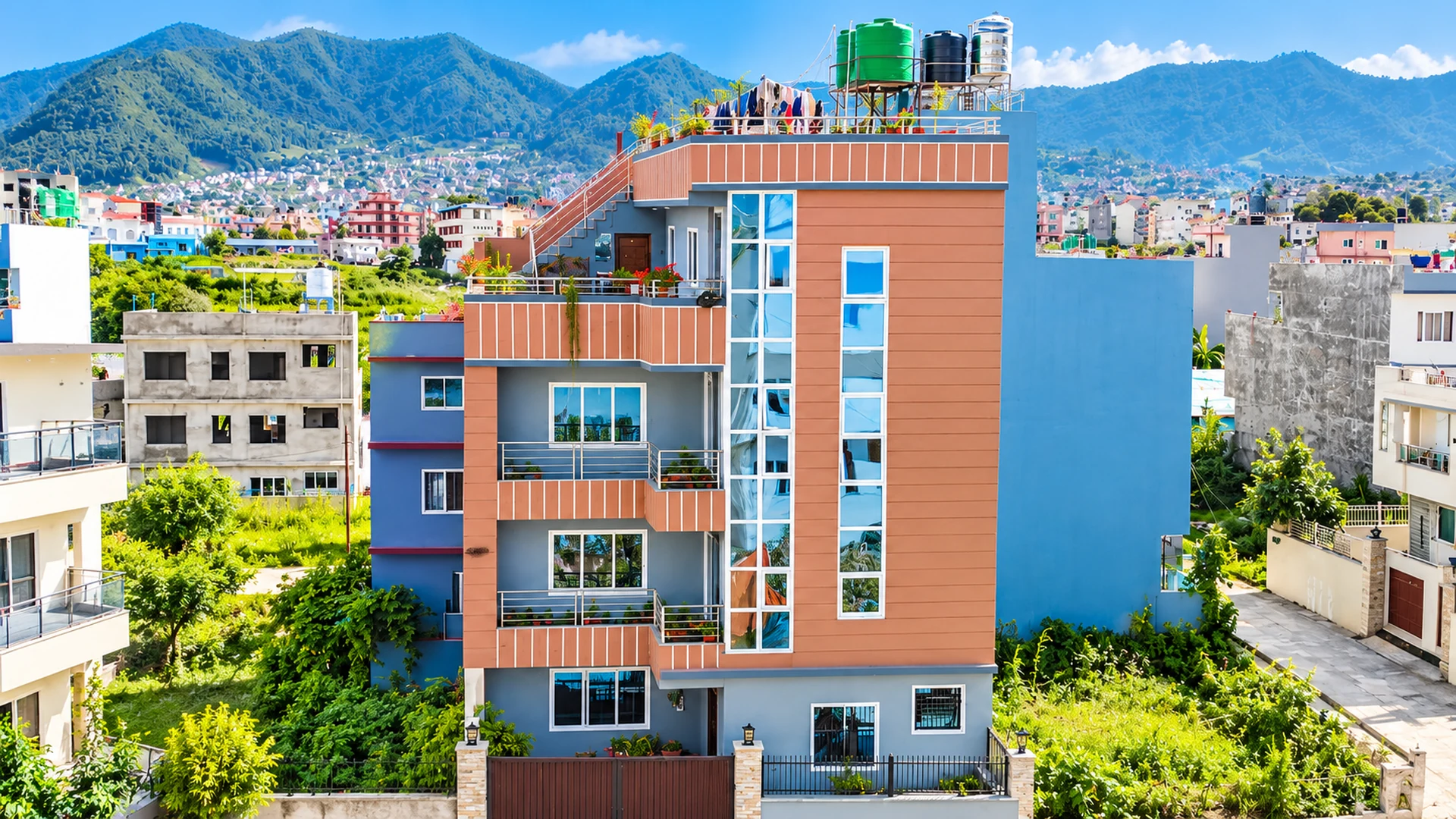
Buying tends to pay off for people who stay put. The main benefits of buying a house in Kathmandu build over years rather than months, which is why your timeline matters as much as your budget. If you expect to move within a few years, the case for buying weakens considerably, and the sections on renting later in this guide will matter more to you.
You Build Ownership and Gain a Long-Term Asset
When you buy, your monthly commitment goes toward a property that is yours rather than to a landlord. If you finance the purchase, your repayments gradually reduce what you owe, and the house remains yours to live in, pass on to family, or sell when the time comes. Property values can rise or fall, so treat a house as a long-term holding rather than a guaranteed profit. What ownership does give you is a home that stays yours as long as you keep up with your obligations, and that continuity is hard to replicate while renting.
You Get More Housing Stability
An owner does not have to worry about a landlord choosing not to renew, selling the building, or asking for different terms. For families with children in school, or people who have built their work and social life around one neighbourhood, that predictability matters. You still carry financial obligations, such as loan repayments and upkeep, but the decision about whether you stay is yours. Over the years, that sense of being settled can shape daily life as much as any financial figure does.
You Have Greater Control Over Your Home
Owning lets you decide how your home works for your household. You can repaint, rearrange rooms, add fixtures, or plan a renovation without waiting for someone else’s approval. That freedom matters if you have specific needs, such as space for a home office, a ground-floor room for older parents, or a kitchen layout that suits how your family cooks. Control is broad but not unlimited, since some changes need approval from local authorities or, in shared buildings, from other owners.
What Does Renting Cost Over the Long Term?
Renting is common in Kathmandu, and that is worth saying plainly. The National Statistics Office’s Nepal Living Standards Survey IV, which covers 2022/23, found that 53.4 percent of households in urban Kathmandu Valley rented their homes, compared with 15.1 percent of households nationwide. Renting here is a mainstream choice, not a fringe one, so choosing to rent is nothing to feel behind about.
The same survey shows how quickly the picture has changed. In 1995/96, 93.8 percent of Nepali households lived in a home they owned and 2.2 percent rented. By 2022/23, ownership had fallen to 81.4 percent and renting had risen to 15.1 percent. The NSO notes that the drop in ownership has mostly been taken up by rental housing, which points to a real shift in how people choose to live.
Over many years, the cost of renting is the ongoing payment itself. Rent can change when an agreement is renewed, depending on its terms, so your monthly housing cost may not stay fixed. When the period ends, whether that is five years or fifteen, you have had a place to live for the time you paid for, but no ownership stake to show for it.
Renting can still be the more practical option, depending on your financial situation and future plans. Rent buys flexibility, a smaller upfront commitment, and often less responsibility for repairs, depending on the agreement, and those are real benefits. The difference is simply in what you are left holding at the end.
What Costs Come With Buying a House?
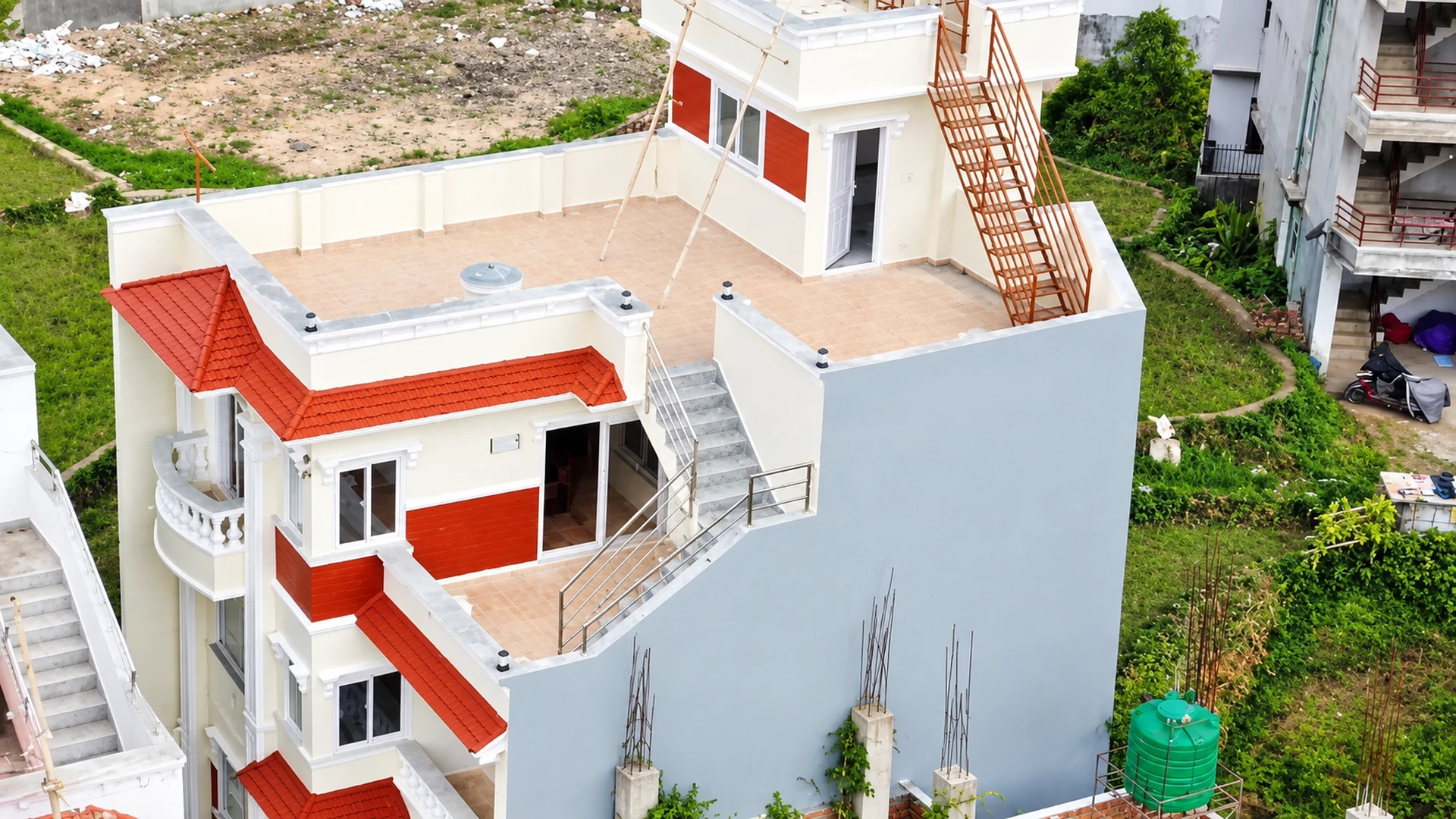
Buying a home involves more than simply paying the listed price. Owning a house in Kathmandu comes with several cost categories, and it helps to plan for all of them before you commit.
Start with the down payment, which is the portion you fund yourself if you borrow to buy. If you take a loan, interest is an ongoing cost on top of the amount you borrow. Registration and transaction costs arrive at the point of purchase, and applicable taxes and fees depend on current rules, so confirm them before you finalise a budget.
After the purchase, maintenance and repairs become yours to manage, and a renovation, if you want one, is a separate expense. Building or shared-facility charges may also apply depending on where you buy.
The number to estimate is the total cost of ownership, not the sticker price. A house that looks affordable at purchase can feel stretched once these categories are added in. For the specifics, check current figures for each category with official and bank sources rather than relying on rules of thumb.
When Is Renting Better Than Buying?
Renting can make more sense when your plans, work, or living situation may change soon. If a job change, a study plan, or a family decision might take you out of Kathmandu, a purchase can become a burden, because selling takes time and may cost you along the way.
Renting also makes sense if your income is uncertain or your savings are thin. A loan repayment is a fixed obligation, and taking one on without a stable cushion can cause real strain. The same applies if the monthly repayment would leave little room for other expenses or emergencies. Renting also keeps a large sum from being locked into one property while other priorities compete for that money, such as education costs or a business you want to start.
Finally, renting suits people who have not decided where they want to settle. Living in a neighbourhood for a year or two before committing is a sensible way to learn whether it works for your daily routine. Waiting until the decision feels clear is a legitimate choice, not a failure to act.
When Should You Consider Buying a House in Kathmandu?
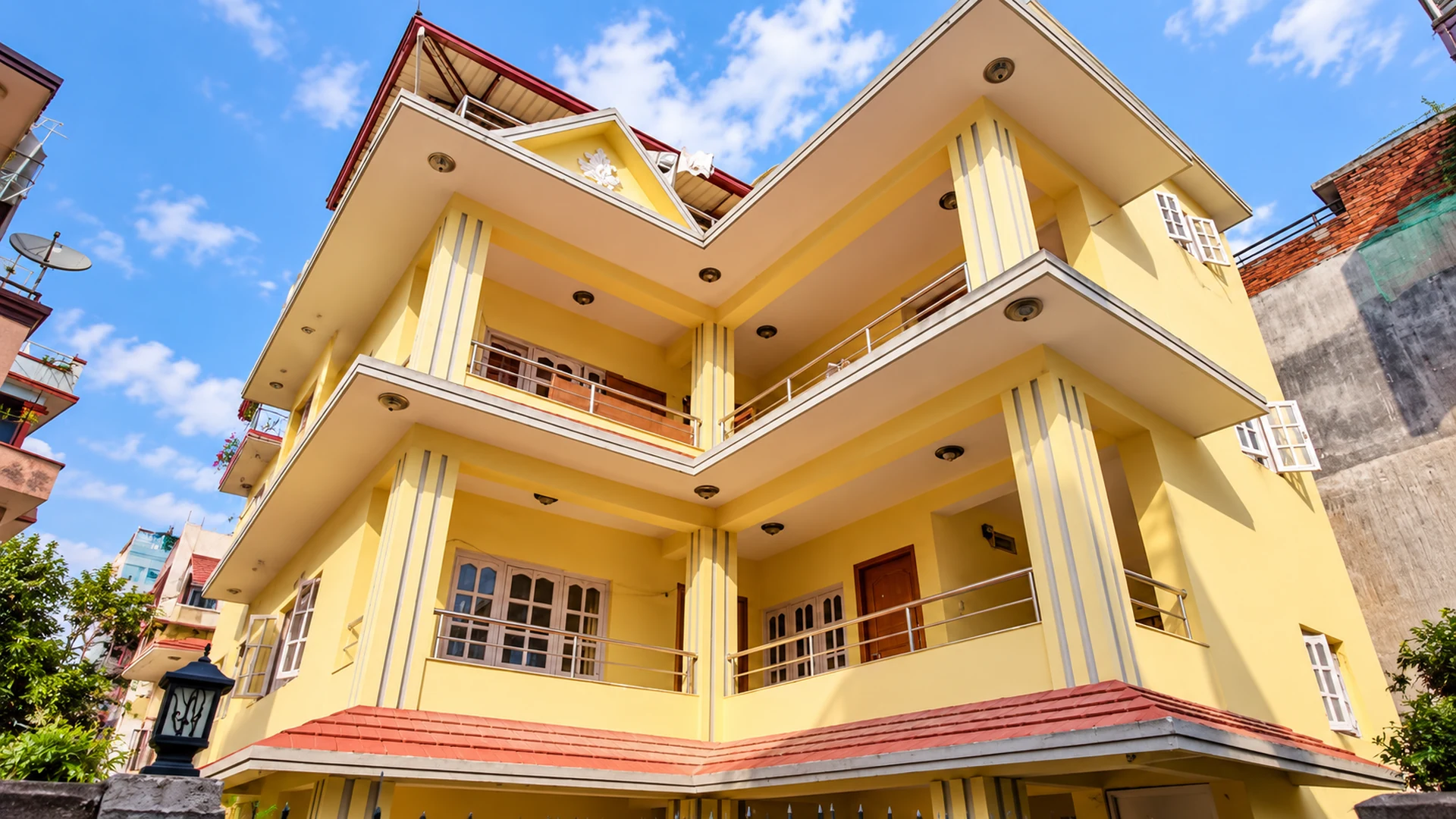
The better question is whether you are ready to stop renting, not only whether you can afford a house. Home ownership in Kathmandu works best as a long-term plan, so readiness covers more than money.
From a buyer’s side of the table, readiness is more than arranging a down payment. It is about whether your income, emergency savings, expected length of stay, and future housing needs make ownership sustainable. A stable income and a plan to remain in Kathmandu for years are the strongest starting points. So is having emergency savings that stay untouched after the down payment, because repairs and surprises arrive on their own schedule.
Repayments should feel manageable on your current income, not on optimistic future earnings. Think about your household as well. A growing family, ageing parents, or a need for a home office can change what size and layout will suit you in five or ten years. It also helps to talk the decision through with the people who would live in the house. A purchase affects everyone in the household, and agreeing on priorities early prevents disagreements once you start viewing properties. If most of these points line up, buying deserves serious consideration. If several do not, waiting is a reasonable decision.
What Should You Do Once You Decide to Buy?
Once you have decided, the work shifts from whether to buy to how to do it well. Set a firm budget, choose a location that suits your daily life, verify the legal documents, inspect the property, and arrange your financing. Each step deserves care, and skipping any of them is where costly mistakes tend to begin. Taking the steps in order keeps a large decision from turning into a rushed one.
The full walkthrough is in Buying a House in Kathmandu: What First-Time Buyers Should Know, so there is no need to repeat it here.
Should You Buy or Keep Renting in Kathmandu?
There is no answer that fits everyone. Buying suits people with a stable income, long-term plans in Kathmandu, and enough savings to handle both the purchase and the surprises that follow. Renting suits people who value flexibility, are still deciding where to live, or would be stretched by a loan.
Whichever way you lean, make the decision on your own timeline. A calm, well-informed choice serves you better than one made under pressure from market chatter or the opinions of others. If you are leaning toward buying, take your time, compare options, and be honest about your budget. When you are ready to look at homes, Punarvaasu Nepal can help you explore options and answer your questions.
Frequently Asked Questions
Which option makes more sense in Kathmandu: buying or renting?
It depends on your plans and finances. Buying tends to suit people who will stay for years and can manage the costs comfortably, while renting suits those who need flexibility or are still building savings. Neither is right for everyone.
How much money do I need before buying a house in Kathmandu?
There is no single figure, because it depends on the property, your loan terms, and the purchase costs. Work out your budget using the price of the home you are considering and the latest loan conditions offered by your lender. Our first-time buyer guide and house price guide go further.
Is buying a house in Kathmandu a good long-term investment?
It can be, but property values are never guaranteed. Prices can rise or fall, and a house also carries upkeep costs and takes time to sell. Treat it first as a home you plan to keep, and any gain as a possible benefit rather than a promise.
When does staying in Kathmandu long term make buying worthwhile?
There is no universal number, because it depends on your costs and how easily you could sell. The longer you expect to stay, the more time a purchase has to justify its upfront costs, and a plan to move within a few years usually favours renting.

Join The Discussion