Buying land in Nepal involves a clear legal process that includes verifying ownership through the Lalpurja, checking land records at the Malpot office, confirming tax clearance, and completing registration under your name. To avoid legal risks and financial loss, buyers must follow a structured step-by-step approach from selecting the right location and verifying documents to final ownership transfer.
In Nepal, most land transactions fail or get delayed due to incomplete verification, unclear ownership history, or misunderstanding of government procedures. A reliable way to reduce these risks is to follow a legally guided process and work with verified property sources like a real estate platform in Nepal that provides transparent listings and accurate property details.
Step-by-Step Process to Buy Land in Nepal
1. Decide your budget, purpose, and location first
Start with the basics. Define whether you are buying land for a home, rental construction, resale, farming, or long-term investment. Then set a full budget, not just a purchase budget. Your total spend may also include registration fees, local charges, legal fees, broker fees, document preparation, and bank-related costs if financing is involved. Buyers who skip this step often focus only on the land price and later discover that the transfer cost is higher than expected. Official registration and tax tools exist because the total transfer cost depends on transaction type, location, and valuation.
Location also affects resale value, road access, future construction, and utility availability. In practice, many buyers in Kathmandu Valley compare access road width, neighborhood growth, nearby schools or hospitals, and whether the land is better suited for residential or commercial use.
2. Find land that is already documented and easier to verify
Do not start with “cheap land.” Start with land that can be verified. A good listing should already make clear the location, land area, road access, orientation, and intended use. Verified listings reduce wasted time because they give you a starting point for document checks, site visits, and ownership review.
Before you move forward, ask for the core details:
- owner name
- exact plot details
- total land area
- access road
- asking price
- copy of Lalpurja
- latest tax payment record
If the seller or agent avoids sharing basic ownership details early, treat that as a warning sign.
3. Check the Lalpurja and confirm the seller is the legal owner
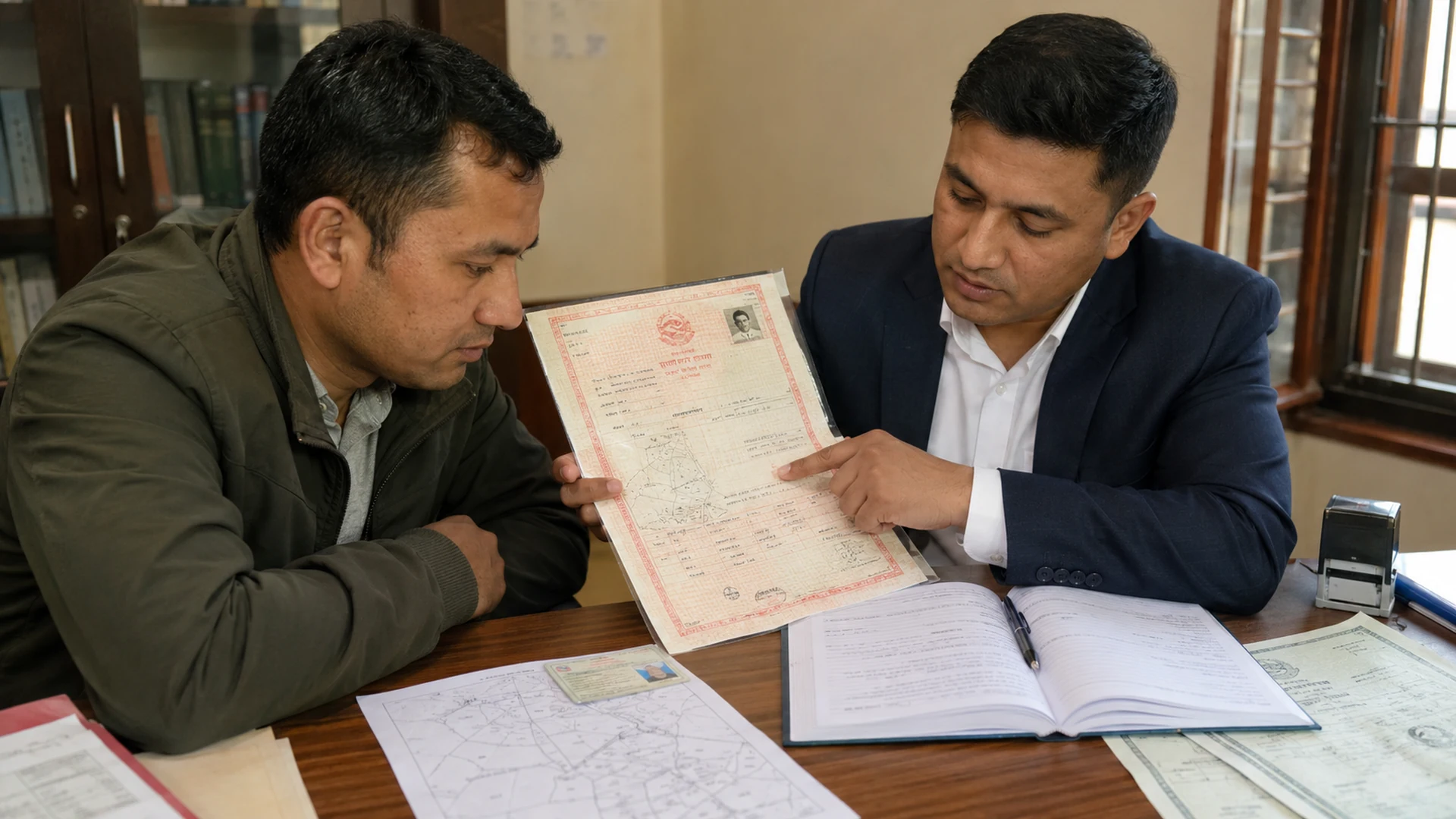
The first legal check is simple: the person selling the land must be the person who has the legal right to transfer it. In Nepal, that means the land ownership certificate, commonly called Lalpurja, matters immediately. Current ranking pages and legal explainers all emphasize the Lalpurja as the starting document in a valid transfer.
Check these points carefully:
- Does the seller’s name match the Lalpurja?
- Do the plot number, area, and boundaries match what you were shown?
- Is the Lalpurja original or only a scanned copy?
- Is the land already mortgaged, blocked, disputed, or partly transferred?
This is where many buyers make their first mistake. They assume family possession means legal ownership. It does not. Only the record matters.
4. Verify the land record at the Land Revenue Office or through official land-record systems
A private explanation is not enough. Verify the land through the relevant official channel. Nepal’s land administration system uses LRIMS, and the Department of Land Management and Archive highlights this digital land-record framework as part of official service delivery. That matters because land transfer depends on recorded ownership, not just a paper promise.
At this stage, confirm:
- recorded owner name
- plot details and record status
- whether the land is under restriction or dispute
- whether taxes are cleared
- whether there is any stop, hold, or other registration issue
This step protects you from fake documents, outdated copies, and undisclosed legal problems.
5. Check land type, zoning, and whether the plot is practical to use
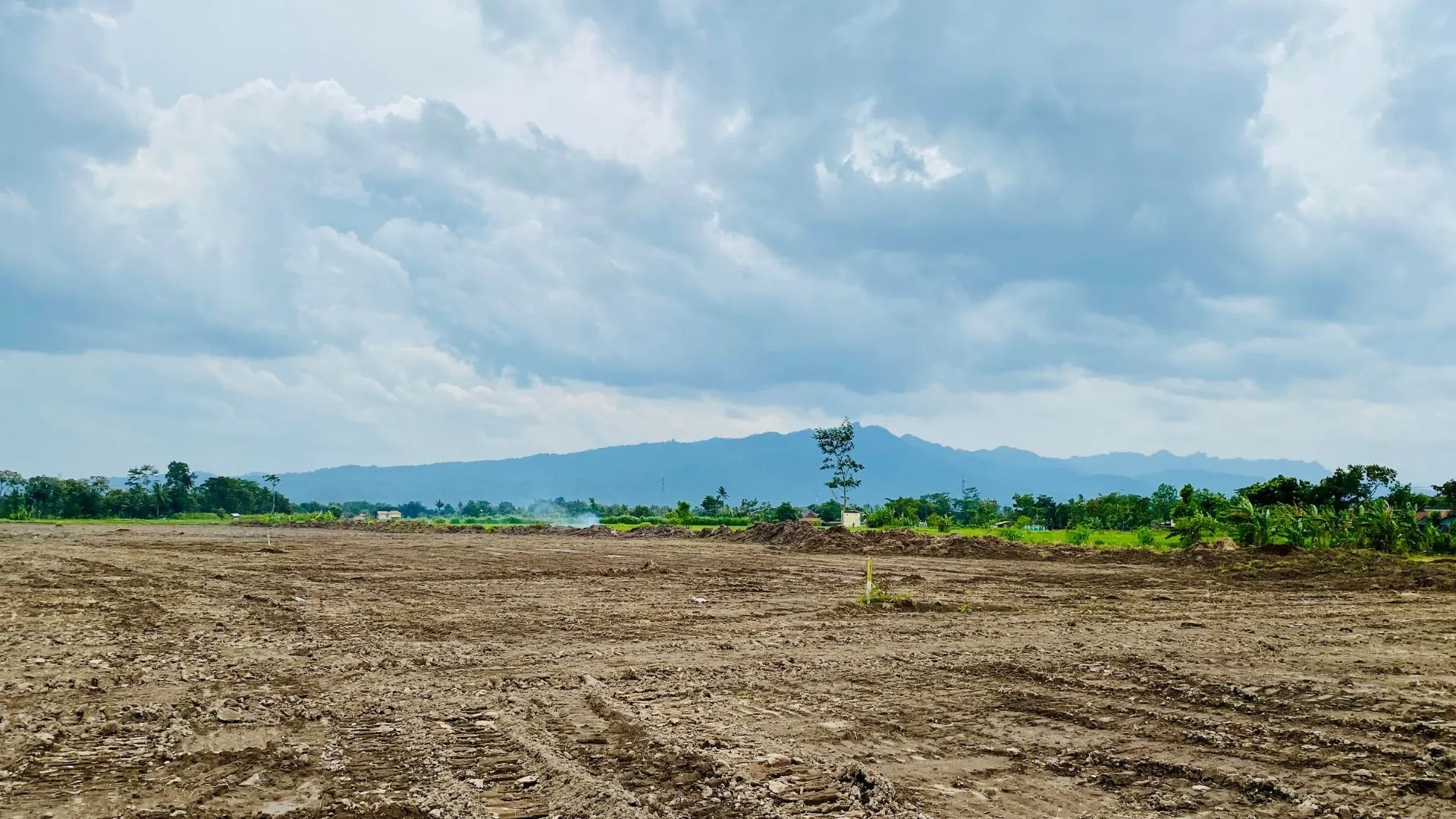
A plot can be legally owned and still be a poor purchase. Before paying any advance, confirm what type of land you are buying and whether it fits your purpose. Legal and market checklists in Nepal repeatedly stress zoning, land-use status, and practical usability.
Review these issues:
- residential, agricultural, or commercial use
- municipal or ward limitations
- road access
- drainage and slope
- flood or landslide exposure
- water and electricity access
- future buildability
If you plan to build a house, a cheap plot with weak access, unclear boundaries, or land-use mismatch can become expensive very fast.
6. Visit the land physically and compare the site with the documents
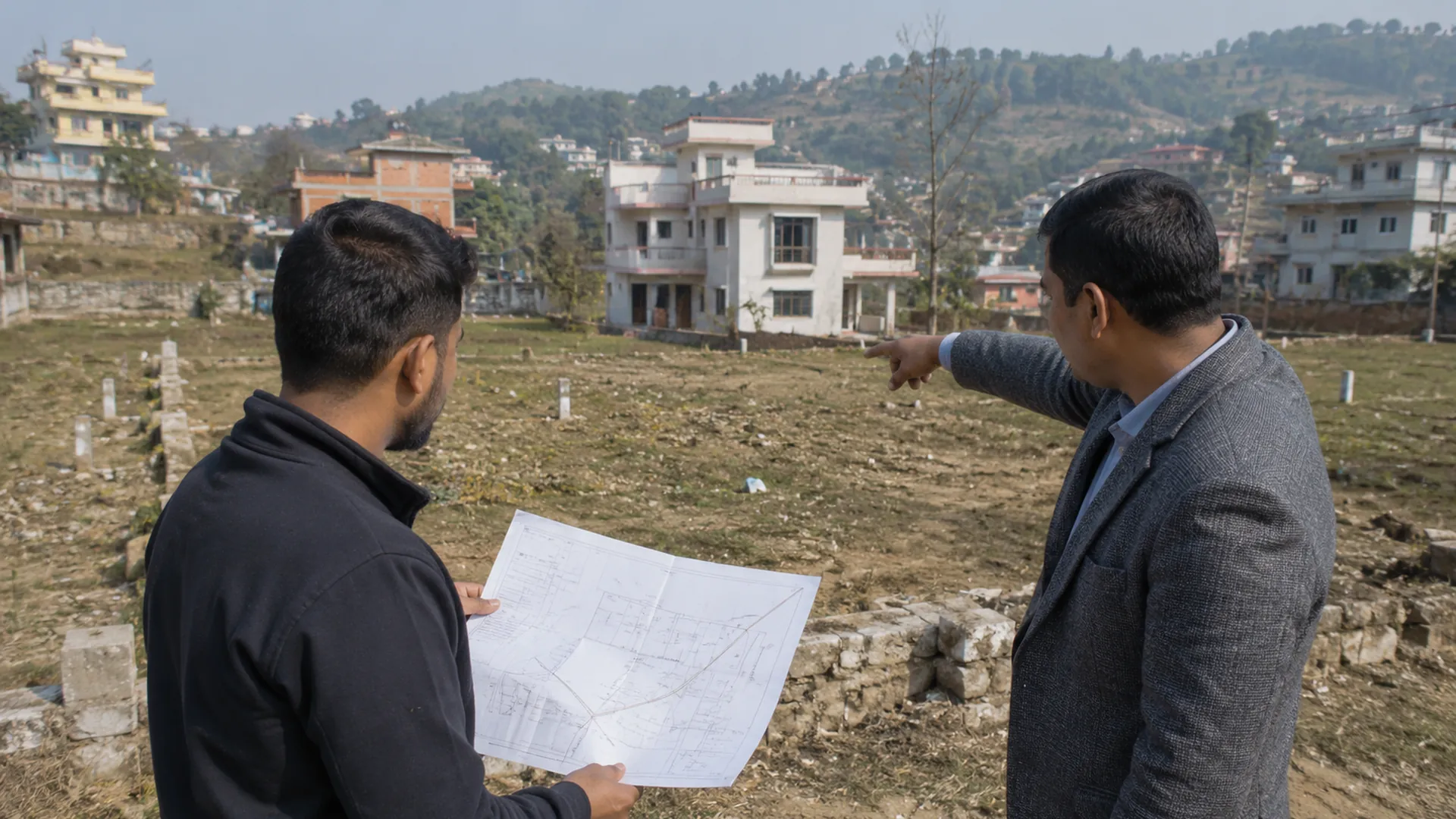
Never buy based on documents alone. Physical inspection is still essential. Visit the site and match what you see with the paperwork.
Check:
- actual boundary position
- neighbor claims or visible encroachment
- road access in real conditions
- terrain quality
- whether the area is already developed
- whether utility lines are realistically available
A site visit also helps you catch common ground-level issues that documents do not show clearly, such as awkward shape, poor entry, drainage problems, or access that exists on paper but not in practical use.
7. Sign a preliminary agreement only after verification
Once ownership and basic legal checks are complete, buyers and sellers often sign a preliminary agreement or MOU and pay a token amount. Several current Nepal real-estate explainers describe this stage as the point where the deal terms, advance payment, and transfer intent are formally written down before final registration.
Your preliminary agreement should clearly include:
- buyer and seller details
- land details
- Final agreed price
- amount paid in advance
- payment timeline
- registration date
- consequences if either side backs out
Do not use a vague one-page note for a high-value land purchase. The clearer the written agreement, the lower the chance of later conflict.
8. Prepare the final transfer documents for Malpot registration
The final transfer stage happens at the Land Revenue Office. Legal guides and service pages consistently show that both parties must come with the required identity and land documents so the office can verify the transaction and process the deed transfer.
This is usually where the final deed is signed, biometrics or identification checks are completed, fees are paid, and the transfer is recorded.
9. Pay official taxes and fees based on the assessed value and transaction details
Land registration in Nepal is valuation-based. The Department of Land Management and Archive publishes minimum land valuation books for the current fiscal year and also provides an official registration rate calculator and capital gains tax calculator. That means the final payable amount depends on official valuation, local office rules, transaction type, and applicable tax rules.
A practical point matters here: buyers often focus on the negotiated market price, but official fees may be tied to the government-assessed value and local rate schedule. Some legal explainers in Nepal note that registration fees can vary by district and that capital gains tax is generally a seller-side issue, while transfer-related charges and registration costs often affect the buyer’s total outlay.
10. Complete the ownership transfer and collect the updated record
The process is only complete when the ownership transfer is recorded and the updated land record is issued. Legal explainers describe this as the stage where the buyer’s name is entered in the official land record and the new ownership certificate is processed.
Until that is done, do not assume the transaction is fully finished.
Documents Required to Buy Land in Nepal
The exact document list can vary slightly by office and transaction type, but the standard land-transfer process in Nepal usually requires these items: citizenship documents of buyer and seller, original Lalpurja, tax-clearance proof, photos, and transfer-related forms or deed papers. Multiple Nepal legal and real-estate guides list the same core items.
Here is the practical list buyers should prepare:
- Buyer’s citizenship certificate
- seller’s citizenship certificate
- original Lalpurja
- latest land tax clearance receipt
- passport-size photos
- preliminary agreement, if already signed
- Final deed or transfer documents
- ward or local recommendation, where applicable
- marriage or relationship documents, if the office asks for them in special cases
- company documents, board resolution, and PAN certificate if the seller or buyer is a company
Do not wait until registration day to organize documents. Missing papers are one of the easiest ways to delay a transfer.
Total Cost of Buying Land in Nepal
There is no single national flat fee for every land purchase. The total cost depends on location, land value, transaction type, and who is legally responsible for which payment. Nepal’s official land administration system reflects this by publishing annual valuation books and offering calculators rather than a universal fee chart.
In most cases, buyers should budget for:
- registration fee
- service charges
- deed preparation or legal drafting cost
- broker commission, if applicable
- local taxes or transfer-related local charges, if applicable
- bank processing and valuation fees if taking a loan
Sellers usually need to consider capital gains tax on the profit from the sale. Recent Nepal banking and legal explainers describe real-estate capital gains tax as depending on the holding period and taxable gain, while the Department of Land Management and Archive offers an official CGT calculator for estimation.
How to Check If Land Is Legal in Nepal
To check whether the land is legally safe to buy, verify the land in layers.
- First, verify the owner through the Lalpurja.
- Second, verify the tax-clearance status.
- Third, confirm the record at the Land Revenue Office.
- Fourth, check whether the land type matches your intended use.
- Fifth, confirm there is no dispute, restriction, encroachment, or blocked transfer status.
This matters because some land problems are document problems, while others are use problems. For example:
- correct owner, but unpaid tax
- valid title, but no practical access
- attractive price, but zoning mismatch
- clear papers, but an active local dispute
A legally cleaner transaction usually comes from checking both paperwork and physical reality.
Common Mistakes to Avoid When Buying Land in Nepal
Paying token money before checking ownership
This is one of the most common buyer errors. An advance payment should come after core verification, not before. Current Nepal real-estate guides repeatedly put document and ownership checks ahead of final commitment.
Trusting verbal claims about road access or land use
Road width, utility access, and zoning should be checked, not assumed. A seller’s promise is not a substitute for official or physical verification.
Ignoring the official valuation and transfer cost
Buyers sometimes plan only for the purchase price. But registration costs, service fees, and tax calculations can change the real budget. Nepal’s official valuation books and calculators exist for a reason.
Skipping the site visit
Documents can be clean while the land itself is impractical. Slope, access, drainage, and neighborhood conditions still matter.
Using incomplete agreements
A vague advance-payment note can create conflict later. Write the payment terms, timeline, and default clauses clearly.
How Long Does It Take to Buy Land in Nepal?
There is no single guaranteed timeline, because the speed depends on how ready the documents are, whether taxes are cleared, the workload of the local office, and whether any legal issue appears during verification. In practice, Nepal legal explainers often describe the final office-side transfer as relatively short once all papers are ready, but the full buying process can take longer because buyers still need time for search, site inspection, negotiation, document review, and tax preparation.
A practical timeline looks like this:
- property search: variable
- Due diligence and document collection: a few days to longer if issues appear
- Agreement and payment planning: 1 to several days
- Final registration: often short once paperwork is complete
For users, that is more useful than a false promise like “one-day land purchase.” The registration event may be fast. Safe buying is not.
Tips for First-Time Land Buyers in Nepal
- Buy with documents, not emotion.
- Compare at least a few plots before deciding
- Ask for the Lalpurja early.
- Check the current government valuation for the area.
- Use the official registration and CGT calculators before agreeing on final numbers.
- Visit the land in person.
- Keep all payments recorded.
- Use a written agreement.
- If the transaction value is high or the ownership history is complicated, get legal help before registration.
This is the practical difference between buying land confidently and buying land blindly.
Where to Find Verified Land for Sale in Nepal
A strong property search process saves time only if the listings are detailed enough to verify. Look for listings that clearly show location, land size, road access, price, and purpose. For example, structured listing pages that include area, access, rate, and property type make it easier to compare options before you begin document checks.
For your own site, this is also where the blog should naturally link to:
- land for sale in Kathmandu
- land for sale in Lalitpur
- residential land listings
- Property Inquiry Page
That internal linking helps both users and SEO. It connects informational intent to commercial intent without making the article feel sales-heavy.
Conclusion
If you want to know how to buy land in Nepal safely, the short answer is this: verify first, pay later, and register properly. A safe purchase is not built on a good deal alone. It is built on verified ownership, clear land records, correct documents, official valuation, and proper registration at Malpot. Nepal’s current land administration system, annual valuation books, and official fee and tax calculators all point to the same lesson: land buying is a document-led process. Buyers who respect that process reduce risk and make better decisions.