

The real estate market in Nepal has grown considerably over the last few decades, according to Statista, with projections indicating that it will reach a value of NPR US$453.91bn by 2025. This growth is driven by urbanization, remittances, infrastructure development, and an increasing demand for both residential and commercial spaces.
Cities like Kathmandu, Pokhara, and Butwal have seen a significant rise in land prices, with Kathmandu’s residential sector contributing to a large portion of the projected market volume of NPR US$390.33bn in 2025. Additionally, rural municipalities, benefitting from improved road access and development projects, have experienced an uptick in land prices as well.
Such a thriving market makes proper property and land valuation in Nepal exceptionally important. Whether you’re buying, selling, applying for a loan, or investing, accurate valuation is crucial to avoid overpaying, getting into legal trouble, or failing to realize your property’s full potential. Inaccurate valuation can lead to financial setbacks.
In this article, we will guide you through the property valuation process, detailing the approaches used in Nepal, key pricing factors, common mistakes, and a real-life example from the Kathmandu property market.
What Is Property and Land Valuation?
Property and land valuation is the process of determining the economic value of an asset within the real estate market. This process involves using verified data to assess a property’s value, considering both market conditions and the unique characteristics of the property.
Valuation is essential for both residential and commercial real estate, and it considers a range of factors such as location, condition, construction cost, potential rental income, and the land’s specific use (e.g., residential, agricultural, or industrial). Valuation is particularly influenced by the location of the property, which is one of the most significant factors in determining its value.
Urban properties often command higher prices due to better infrastructure and accessibility, while rural properties may be valued based on factors like land type, agricultural potential, or future development plans. Additionally, properties used for housing, apartments, or commercial buildings tend to have different valuation criteria compared to agricultural land or industrial plots.
Why It Matters:
For buyers and sellers, accurate property valuation ensures a fair transaction by identifying a middle ground in negotiations. Buyers get value for their money, while sellers can set realistic prices based on market conditions. An accurate valuation also protects consumers from overpaying or undervaluing property, preventing costly mistakes.
For financial institutions and investors, property valuation is crucial in making safe investment decisions. It enables them to assess the true market value of a property, determine loan amounts, and predict potential returns on investment. Proper valuation aids in risk assessment and helps institutions forecast future market trends, ensuring that investment decisions are made with a clearer understanding of potential gains or losses.
Investment Decision:
Valuation plays a significant role in investment decision-making by making it easier to forecast potential returns and assess risks. A well-conducted valuation provides investors with reliable data to make informed choices, whether for residential properties, commercial investments, or land development.
By understanding the true value of a property, investors can avoid underestimating or overestimating their financial commitments.
How Property and Land Valuation Works in Nepal
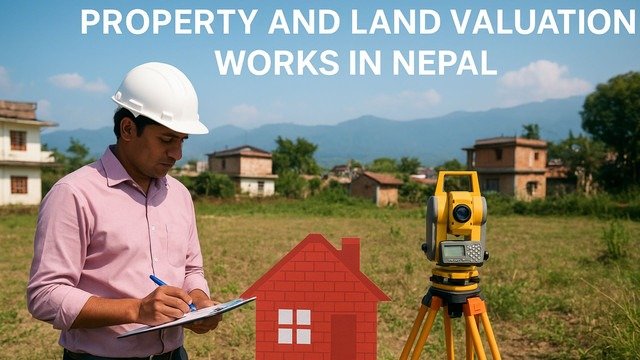
Nepal’s property and land valuation system combines both state-imposed price controls and market-determined prices. The government sets official rates for land, primarily used for taxation and registration purposes.
These government rates serve as the foundation for legal processes, but in reality, actual market prices can differ significantly, often much higher.
Key Factors Affecting Value:
Several factors contribute to the valuation of land and property in Nepal, each of which can significantly influence the price:
- Location & Accessibility: Proximity to key areas like markets, schools, and business districts greatly impacts the land value. A prime location can drive up demand and subsequently raise prices.
- Road Infrastructure: The width and quality of the road leading to a property play a critical role in valuation. For example, a property on a paved road with a 20 ft width may be valued much higher than one on an 8 ft road, potentially even doubling the price.
- Zoning & Land Classification: Land classification, such as residential (Ghar), commercial (Jagga), agricultural (Khet), or industrial zones, determines its intended use and affects its price. Properties designated for commercial use tend to have higher market values.
- Modernization: Properties equipped with basic utilities like water supply, garbage disposal, and electricity are valued higher due to increased livability and convenience.
- Demand & Urban Planning: The overall demand for land in an area, influenced by urbanization and development plans, can significantly impact its value. Areas with better urban planning and growth prospects see rising land values.
- Shape and Frontage of Land: The shape of a plot, along with its frontage (e.g., a wider frontage tends to be more desirable), can also influence the land’s valuation.
- Proximity to Important Developments: Nearby infrastructure projects, such as new airports, highways, or other large-scale developments, can increase the value of surrounding properties.
Role of Government Guidelines vs. Market Price
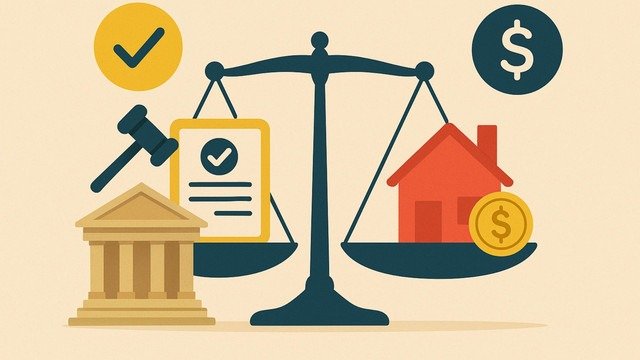
In Nepal, the government-established rate serves as the standard for property taxation and registration. This rate is often lower than the actual market price, which is determined by real-world transactions. The market rate is typically much higher and reflects the true value of a property in the current economic environment.
Example:
- Lalitpur Imadol 2024 Govt Rate: ~₹22 lakh per anna
- Actual Market Selling Rate: ₹45–60 lakh per anna
The difference between these two rates plays a significant role in property transactions. It affects loan valuations, the tax calculation, and the negotiation process between buyers and sellers. The size of the gap between the government rate and the market rate is a critical factor in how property deals are structured and priced.
Methods Used for Property Valuation in Nepal
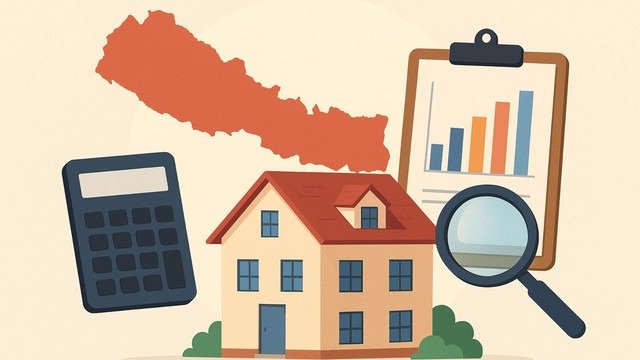
- Comparable Market Analysis (CMA)
This method identifies similarities between recently sold properties of the same type and in the same location. It’s particularly useful for active real estate markets such as Kathmandu, Pokhara, and Itahari. By comparing similar properties, CMA helps establish a fair market value based on recent sales. - Government Rate vs. Commercial Market Rate
Government rates are used for legal documentation and taxation purposes. On the other hand, market rates reflect the actual value of the property in real transactions, typically higher than the government-set rates. The market rate is critical for investment decision-making and evaluating the true price of a property. - Income-Based Valuation
This method is used for properties that generate income, such as rental properties. The formula is:
Value = Net Annual Income ÷ Capitalization Rate
For example, if a property generates ₹12,00,000 annually and the capitalization rate is 8%, then:
Value ≈ ₹1.5 crore - Cost-Based Valuation
This approach is commonly used for houses and buildings. The formula is:
Value = Land Value + Building Cost (after depreciation)
This method considers both the land’s market value and the depreciated cost of the construction. It’s useful for determining property values for insurance, tax purposes, or new construction projects.
Each of these valuation methods has its purpose. It’s essential to determine which method best suits your situation—whether for sale negotiation, loan processing, or dispute resolution.
How to Valuate Property in Nepal: Step-by-Step Guide
- Gather Essential Documents
- Lalpurja (Land ownership certificate)
- Trace map (नक्सा)
- Building completion certificate / Nirman Sampanna (for houses)
- Road access documents (Ghar Bato Pramanpatra)
- Lalpurja (Land ownership certificate)
- Inspect Property/Land Condition
- Evaluate land shape & orientation
- Assess construction age & condition
- Check the road width, drainage, and the surrounding environment.
- Evaluate land shape & orientation
- Check Government Valuation Rates
- Obtain government rates through local land revenue offices.
- Obtain government rates through local land revenue offices.
- Analyze Nearby Market Prices
- Consult with brokers, survey listings, and talk to locals to understand current market trends.
- Consult with brokers, survey listings, and talk to locals to understand current market trends.
- Use Valuation Formulas or Tools
- Use online tools or consult certified valuators (अनुमोदित मूल्यांकनकर्ता) for more accurate results. This is especially important when applying for bank loans.
Property Valuation Cost in Nepal

Typical pricing depends on:
- Location
- Purpose (loan, purchase, dispute, resale)
- Size and complexity
| Service Type | Typical Cost |
| Residential house valuation | ₹15,000 – ₹50,000 |
| Commercial building valuation | ₹50,000 – ₹2,00,000 |
| Land valuation only | ₹10,000 – ₹30,000 |
| Bank loan collateral valuation | ₹0.1% – 0.35% of property value |
Property Valuation Tools in Nepal
Online property valuation tools use various data sources to estimate property prices, including:
- GIS Data: Geographic Information System data that maps the area and provides detailed geographical insights.
- Area Mapping: Maps that highlight important features, such as proximity to schools, markets, or transportation.
- Market Trends: Data on recent market activity and property price fluctuations in the area.
- Public Listings: Listings of properties that have recently sold or are currently on the market, offering insight into the pricing trends.
Pros:
- Quick Estimation: These tools offer fast and convenient price estimations for a general idea of property value.
- Helpful for Budget Planning: They can assist potential buyers or investors in planning their budgets and making informed decisions on whether to pursue a property further.
Cons:
- Not Accurate for Loan or Legal Documentation: These tools are not reliable enough for official processes like loan approval or legal property transactions.
- Lacks Ground-Level Verification: They don’t consider on-the-ground details like property condition, neighborhood specifics, or local development plans.
Recommendation: While online valuation tools are useful for initial estimates and quick assessments, it’s crucial to consult professional valuators for final decisions, especially for legal documentation and loan processing.
Common Mistakes to Avoid During Property and Land Valuation
- Trusting Only Government Rates: Relying solely on government-set land rates for valuation can lead to inaccurate pricing, as these rates are often lower than market prices and only serve for legal documentation.
- Ignoring Future Infrastructure Projects: Failing to account for upcoming developments, such as roads, airports, or commercial centers, can result in undervaluing land that will appreciate in value once these projects are completed.
- Comparing Unrelated Markets: Comparing properties in areas with vastly different characteristics, such as Tokha and Bhaktapur, can lead to misleading conclusions. Market dynamics, infrastructure, and demand can differ significantly between regions.
- Relying Blindly on Online Calculators: While online calculators provide quick estimates, they lack the nuance of ground-level factors. These tools are not suitable for important decisions like loan approvals or legal transactions.
- Not Checking Land Type: The land’s classification—whether residential, commercial, agricultural, or industrial—plays a major role in its valuation. Overlooking this aspect can lead to significant errors in assessing its true value.
Tips to Increase Property Value
| Strategy | Effect |
| Add road access (wider gate/entrance) | Immediate price jump |
| Improve water, drainage, sewer | Higher livability |
| Legal documentation & boundaries | Faster transaction |
| Small renovations (paint, tiles) | Higher resale price |
Even a 8 ft to 13 ft road expansion has increased land values by 20–40% in suburban Lalitpur.
When to Hire a Professional Valuator

It’s important to hire a licensed professional valuator in the following situations:
- Applying for a Home or Business Loan: Financial institutions require an accurate, unbiased valuation to determine the loan amount you can receive. A professional valuator ensures that the valuation meets the bank’s requirements.
- Buying High-Value Commercial Land: For high-value investments, it’s crucial to have a precise valuation to avoid overpaying. A professional will consider all aspects of the property and its potential for long-term returns.
- Court or Legal Disputes: If you’re involved in a legal case regarding property, such as a dispute over ownership or land rights, a professional evaluator’s report is often needed to present an official, unbiased value in court.
- Inheritance Distribution: When distributing property among heirs, a fair valuation is necessary to ensure that the division is equitable. A certified valuator can provide an objective and legally acceptable assessment.
- Partnership Valuation: If you’re entering or exiting a partnership, a professional valuation can help determine the value of property assets involved, ensuring fair compensation and a clear agreement.
A licensed evaluator’s report ensures legal validity, accuracy, and impartiality, making it an essential document for official transactions and disputes.
How One of Our Clients Saved ₹35 Lakhs with Proper Valuation

In 2023, our client, Ramesh ji, was looking to purchase a 4-aana land in Mahalaxmi, Lalitpur. The property was listed at ₹42 lakh per anna, marketed as being in a “prime commercial district with excellent road access.” However, before finalizing the purchase, Ramesh ji decided to follow our recommendation and hired a professional valuator for a more detailed assessment.
The valuator’s findings revealed several key issues that the seller had not disclosed:
- Road Access: The property was advertised as having 20 feet of road access, but the actual road width was only 13 feet, which could have affected future development and accessibility.
- Drainage Issues: The land had unofficial drainage encroachment, a potential legal and maintenance concern that could lead to future complications.
- Market Comparison: After comparing the property with similar plots in the area, the valuator found that comparable land was selling for ₹33–35 lakh per anna, far below the asking price.
With these insights, Ramesh ji was able to negotiate a much better price of ₹34 lakh per anna, ultimately saving ₹35,00,000.
Without the valuation, Ramesh ji could have easily overpaid for the property, not to mention dealing with potential future issues like drainage problems. This experience demonstrates the real value of getting a professional property valuation before making a major investment.
Conclusion
Accurate property valuation is the cornerstone of making informed and wise decisions in Nepal’s real estate market. It plays a crucial role in ensuring:
- Fair Pricing: Helps buyers and sellers agree on a price that reflects the true market value.
- Legal Transparency: Provides clear and verifiable property details for smooth legal transactions.
- Secure Investment Returns: Enables investors to make confident decisions, reducing the risk of overpaying or underestimating property values.
While online valuation tools can be useful for initial estimates, it is essential to rely on certified valuators for final decisions, legal procedures, and long-term investments. Their expertise ensures accurate and unbiased valuations that protect both your financial interests and legal standing.
If you’re planning to buy, sell, or evaluate property in Nepal and want a more accurate, personalized valuation, we’re here to help. Simply fill out this short form, and our team will guide you with expert insights based on your specific land or property details. Click here.




Join The Discussion