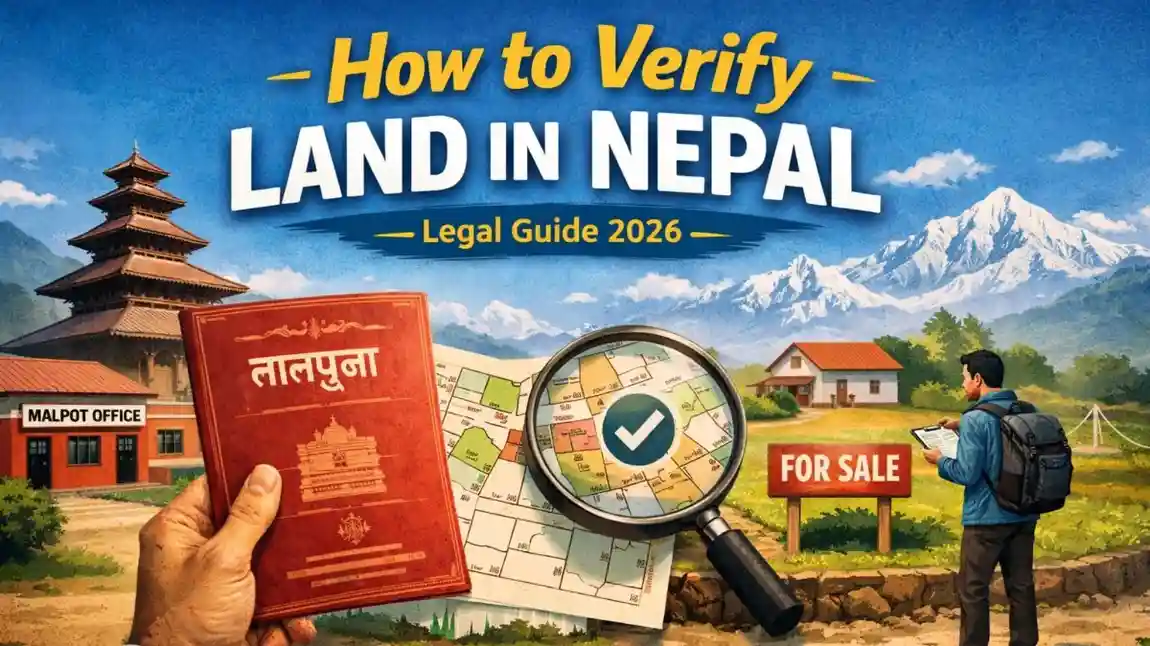
To verify land in Nepal, you can safely check Lalpurja ownership, confirm records at the Malpot office, match the survey map, and ensure the land is free from taxes, disputes, or legal restrictions.
Buying land in Nepal is not just about finding a good location or a fair price. The real test is whether the land is legally clear, correctly mapped, free from tax dues, and safe to transfer.
Since this process involves multiple offices, legal checks, and document verification, many buyers choose to go through trusted real estate platforms that handle verified listings and follow proper procedures.
In Nepal, land registration, ownership transfer, and record management are handled through the land administration system, especially the Land Revenue Office (Malpot), while survey records and map-related services are tied to the Survey Department. Nepal’s legal framework for land and property also sits under laws such as the Land Revenue Act and the National Civil Code.
If you want to verify land in Nepal properly, you should not rely on one paper or one person. You need to check the original Lalpurja, confirm records at Malpot, match the plot with the survey map, review tax status, inspect the land physically, and make sure there is no dispute, mortgage, or restriction on transfer. That is the safest way to avoid fraud and costly mistakes.
Step-by-Step Process to Verify Land in Nepal

Step 1: Verify Lalpurja (Ownership Certificate)
The first thing to verify is the original Lalpurja, which is the land ownership certificate. This document should match the seller’s identity and the land details exactly. Check the owner’s full name, plot details, area, boundaries, and kitta number. If the seller only shows a photocopy, that is not enough. Ask to see the original document and compare it carefully with the seller’s citizenship and supporting records. Legal guidance sources on land registration in Nepal also stress that document verification starts with checking the ownership certificate for authenticity before transfer.
A buyer should also watch for obvious red flags. These include name mismatch, overwritten details, missing pages, inconsistent boundaries, or a seller who avoids showing the original certificate. In practice, many land problems begin because buyers trust verbal claims more than documents. Your first rule should be simple: if the Lalpurja is unclear, stop the deal until it is verified.
Step 2: Check Land Records at Malpot Office
After checking the Lalpurja, the next step is to verify the land at the Land Revenue Office, often called Malpot. Nepal’s land administration system gives Malpot a central role in land registration, ownership transfer, registration records, and related land administration functions. Official public information from the Department of Land Management and Archive describes Malpot offices as the offices that handle registration, transfer, mutation, and land record work.
At Malpot, the buyer should confirm whether the seller is still the legal owner, whether the land is already sold, whether there is any pending transfer, and whether the title is blocked, mortgaged, or under restriction. Legal guidance published in late 2025 also notes that, before transfer, officials verify authenticity, confirm that the land is not mortgaged, check pending taxes, and review legal holds such as court-related restrictions.
This step matters because a clean-looking Lalpurja alone does not guarantee a clean transaction. The official record is what matters.
Step 3: Verify Land Map (Naksha) from Napi Office
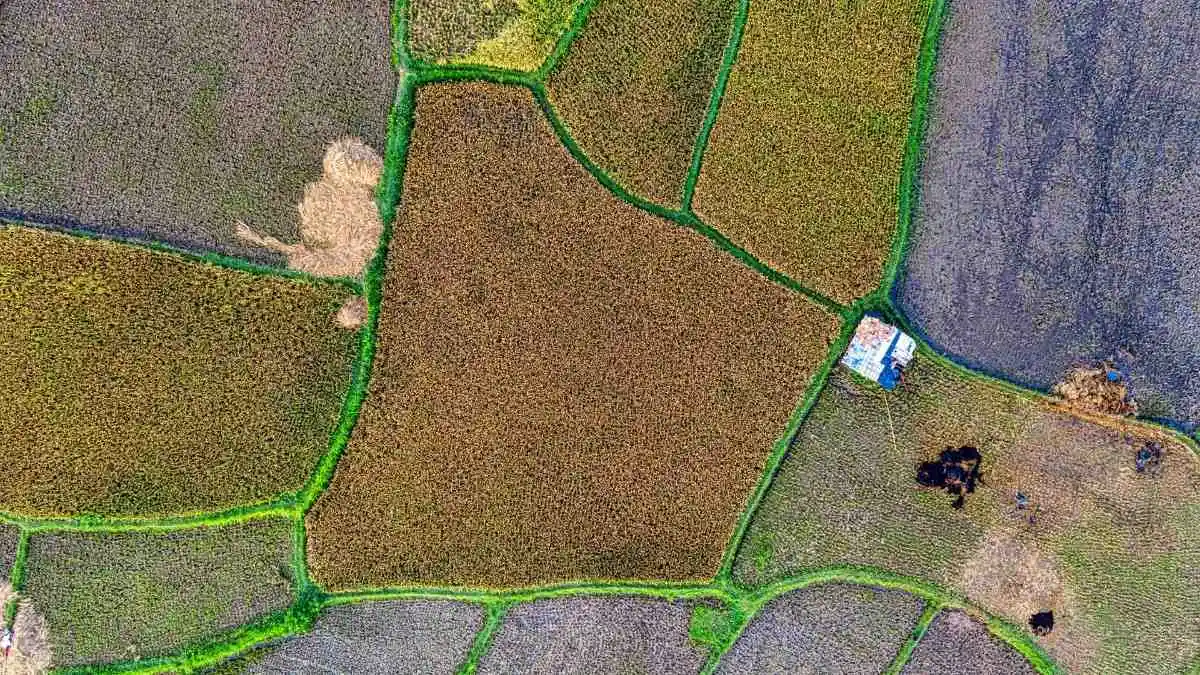
The third step is to match the paper with the ground. The Survey Department (Napi) is the authority behind survey and map-related services, and its official site lists both its citizen charter and online services such as Mero Kitta, along with the National Geoportal. The department also publishes maps and survey-related rules and guidance.
You should verify that the kitta number, land shape, area, and boundaries on the survey map match the actual plot being shown to you. If there is any confusion about the plot line, road access, or overlap with neighboring land, ask for a formal map check or measurement. This is one of the most important steps because boundary disputes and mismatched land measurements are common land-buying problems in Nepal. Legal and practical guides consistently point to checking the cadastral map and survey details before buying.
For many buyers, especially first-time buyers or NRNs, this is where mistakes happen. They assume the land shown by the broker is the same land described on the paper. That assumption can become expensive.
Step 4: Check Tax Clearance (Malpot Rasid)

Land should also be checked for tax clearance before any payment is finalized. Legal land-registration guidance in Nepal says officials review pending taxes and require clearance before the transfer is completed. Some supporting property-law sources also list tax clearance as a required part of the transfer process.
Ask the seller for the latest Malpot tax payment receipt and make sure there are no unpaid dues attached to the land. This step is simple but important. A buyer should not inherit someone else’s unpaid land obligations by moving too fast.
Step 5: Physical Site Verification
A legal file can look perfect and still hide a practical problem. That is why physical verification matters. Visit the land yourself. Confirm the road access, surrounding plots, actual use of the land, slope, drainage, visible boundary markers, and any sign of encroachment. If the land is hard to identify on site, that is already a warning sign. Practical buying guides in Nepal regularly stress that site inspection and land measurement help prevent overlap, hidden encroachment, and boundary disputes.
Do not skip this step because a broker says everything is fine. Experienced buyers know that legal verification and physical verification must go together.
Step 6: Check for Legal Disputes or Restrictions

The final step in land verification is checking whether the land is tied to a dispute, court case, freeze order, mortgage, or public restriction. Legal guidance on land registration in Nepal notes that officials verify legal holds and mortgages before transfer. Some real-estate law guides also point out that a transfer must follow the legal procedure and that wrongful or illegal real-estate practice is prohibited.
This step is especially important for inherited land, family-shared land, and land sold through a representative. If ownership history is unclear, ask more questions before you pay anything.
What to Check Before Paying an Advance for Land in Nepal?

Before paying a token amount or advance, verify the owner, the Lalpurja, the tax receipt, and the map record first. Never pay an advance payment only because the price looks attractive or the seller says another buyer is waiting. A proper advance should be backed by a written agreement that clearly identifies the land, price, payment terms, and the conditions under which the advance will be refunded. Practical property guides in Nepal also warn buyers to formalize the sale agreement process rather than relying on verbal understanding.
This matters because once money moves, pressure increases. Buyers then start ignoring red flags because they do not want to lose their advance. That is exactly when bad deals get finalized.
Common Land Fraud Cases in Nepal (Must Know Before Buying)
The most common fraud risks in Nepal are not always dramatic. Many are simple documents and due diligence failures. Examples include fake or altered Lalpurja, selling mortgaged land without clearing the charge, showing one plot and transferring another, hiding a family dispute, or selling land with boundary or access problems. Practical guides on buying land in Nepal repeatedly warn buyers to verify ownership, taxes, survey details, and encumbrances before transfer.
Another risk is unregistered or restricted land. Some sources specifically warn buyers to avoid land that is not properly registered or is classified in a way that prevents legal transfer. That is why land verification is not just about proving ownership. It is also about proving that the land can be legally sold and used for your purpose.
Required Documents for Land Verification in Nepal

To verify land safety, ask for these documents first:
- Original Lalpurja
- Seller’s citizenship copy
- Latest land tax payment receipt
- Kitta number and map details
- Sale deed or ownership history, where relevant
- Supporting relationship documents in inheritance cases
- Bank release or no-objection proof if the land was mortgaged
Official and legal-reference sources consistently mention the ownership certificate, citizenship, tax-related proof, and transfer papers as core parts of the property verification and transfer process. The Survey Department’s official Mero Kitta portal also says normal users need a scanned land ownership certificate and the landowner’s citizenship copy to use its service application flow.
Quick Land Verification Checklist
Use this simple checklist before you commit:
- Original Lalpurja checked
- Seller identity matched with citizenship
- Malpot record verified
- Mortgage or legal hold checked
- Tax clearance checked
- Survey map matched with the actual plot
- Boundary and road access inspected
- Advance payment terms written clearly
- No family or court dispute found
This kind of checklist improves both buyer safety and content readability because it turns a complex legal process into a practical decision tool.
Common Mistakes Buyers Make While Verifying Land
The biggest mistake is trusting the broker, seller, or relative more than the record. The second is checking papers, but not the site. The third is visiting the site but not checking Malpot. The fourth is paying an advance too early. The fifth is assuming that a “famous area” means the land is legally clean.
Many land problems in Nepal do not start on registration day. They start much earlier, when the buyer skips one boring but important check. Experienced buyers know that due diligence feels slow at first, but it is much cheaper than fixing a bad title later.
How Long Does Land Verification Take in Nepal?
There is no single universal timeline for every land verification case in Nepal. Official citizen charters for land offices set out procedures, required papers, fees, and service times, but the actual time can vary by district, office workload, whether records are digitized, and whether the land has any disputes or mismatches. The Survey Department also provides online support tools such as Mero Kitta for map-related services, which can help with part of the process.
In simple cases with complete papers, the early verification steps can move quickly. In disputed, inherited, mortgaged, or poorly documented cases, the process can take much longer. Buyers should plan for verification before they plan for payment.
What to Do If You Are Not Sure About Land Verification
If you are not fully sure, do not guess. Pause the deal and verify each step properly. Ask for the original documents again. Visit Malpot. Match the survey map. Review tax status. If anything feels unclear, take help from a qualified property lawyer or an experienced real-estate professional who understands Nepal’s land process.
This is especially important for NRNs, first-time buyers, and investors buying in fast-growing areas. A careful buyer may feel slow for a few days, but a careless buyer may stay stuck for years.
Why Land Verification in Nepal Is Important Before Buying
Land verification is important because land in Nepal is a high-value asset, but title, access, record quality, tax status, and family claims do not always become clear at first glance. Nepal’s property framework gives legal protection to ownership and transfer, but that protection works best when the transaction follows the proper legal and administrative process. The law gives structure; verification gives safety.
For buyers, proper verification reduces the risk of fraud, delayed transfer, rejected registration, hidden dues, and boundary disputes. For investors, it protects capital. For families, it protects peace of mind. That is why land verification should never be treated as an optional step.
Conclusion
To verify land in Nepal properly, you should follow a clear order: check the original Lalpurja, confirm records at Malpot, match the map through survey records, verify taxes, inspect the site, and check for disputes or restrictions. That is the safest way to buy land in Nepal in 2026.
If you are buying for investment, family use, or future construction, do not rush because of price pressure. A safe land deal starts with proper verification, not negotiation. And if any part of the process feels unclear, it is better to get expert guidance before making a payment.
For buyers who want to move carefully, this is the simple rule: verify first, pay later.
FAQs
1. Can land be verified online in Nepal?
Partially. You can check maps and records online, but full verification requires visiting the Malpot office.
2. What is the safest way for NRNs to verify land in Nepal?
Use a trusted local representative, verify documents at Malpot, and consult a property expert before payment.
3. How can I check if the land is restricted or blacklisted?
Visit the Malpot office to check for legal restrictions, disputes, or government acquisition notices.
4. Is it safe to buy land through an agent?
Only if verified independently. Never rely only on the agent’s information.
5. What if ownership details don’t match records?
Stop the deal immediately. It may indicate fraud or legal issues.
6. Do I need a lawyer to verify land?
Not required, but strongly recommended for complex or high-value deals.
7. Can agricultural land be bought freely in Nepal?
Not always. Some land has zoning or usage restrictions.
8. How do I confirm road access legally?
Check the cadastral map and verify the site physically.
9. What happens if I skip the ownership history check?
You risk disputes, unclear ownership, or legal complications.
10. Can land be sold without a Malpot record update?
No. Legal ownership is valid only after official registration.